
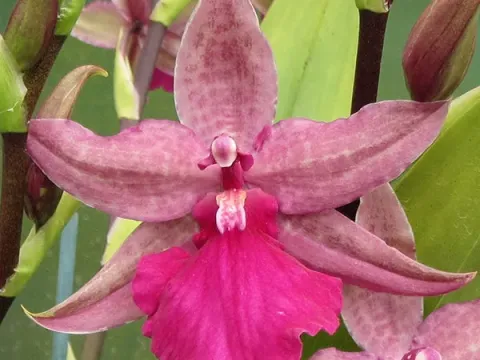
Odontonia
Odontonia
Odontonia is a remarkable intergeneric hybrid orchid belonging to the Orchidaceae family. It is a cross between the genera Odontoglossum and Miltonia, resulting in plants that produce stunning, star-shaped, and often fragrant flowers with intricate patterns.
What the section contains
Odontonia
The culture thrives in cool to intermediate climate conditions. It is essential to maintain daytime temperatures between 18 and 24 degrees Celsius, while ensuring a slight cooling drop at night to promote healthy growth and regular blooming cycles.
Light requirements for Odontonia are specific: they prefer bright, filtered light. Exposure to direct midday sun is damaging to the foliage and can lead to severe burns, so utilizing sheer curtains or placing plants in eastward-facing windows is highly recommended.
The potting medium must provide excellent drainage and allow air circulation around the roots. A mixture based on conifer bark, charcoal, and perlite is ideal for Odontonia, as it prevents the roots from remaining damp for too long.
Humidity is a key factor in the successful cultivation of these hybrids. An optimal humidity level of 60 to 70 percent is desirable. In standard household environments, regular misting or the use of humidity trays filled with wet gravel can prevent leaf desiccation.
Odontonia is susceptible to several common orchid pests, most notably spider mites and scale insects. These pests thrive in dry environments and can quickly weaken the plant by feeding on the sap, causing yellowing and eventual leaf drop.
Root rot, often caused by overwatering or using a degraded potting medium, is the most common disease affecting this culture. It leads to the decay of the root system and the softening of pseudobulbs, which can be fatal if not caught in time.
Bacterial spot and fungal infections may occur if water is trapped in the leaf axils or if there is poor air circulation around the plant. These infections often present as dark, water-soaked spots that spread rapidly across the leaf tissue.
Effective pest management involves regular cleaning of the leaves with mild soap solutions and the immediate isolation of infected plants. For serious infestations, systemic pesticides specifically approved for orchids should be used sparingly.
Proper hygiene is essential: always use sterilized tools when trimming the plants or removing dead roots. Ensuring a good airflow in the room helps to evaporate excess moisture and significantly reduces the risk of fungal outbreaks.