
Borassus akeassii
Borassus akeassii
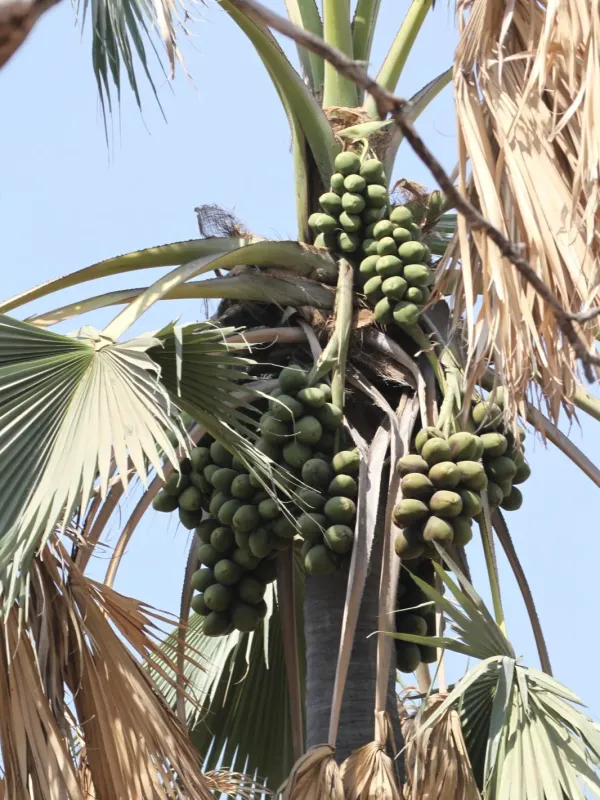
Description
Sowing dates
Borassus akeassii is propagated primarily through seeds. Due to the development of a deep taproot, it is highly recommended to sow seeds directly into the final growing site or into deep containers to avoid disturbing the root system during transplantation.
The ideal time for sowing is at the onset of the rainy season. Seeds should be buried at a depth of 5 to 10 centimeters, ensuring enough moisture for germination while protecting the seed from excessive surface heat.
Germination is a slow process that can take several months. Young plants require partial shade during their first year to protect them from intense direct sunlight, which can cause leaf desiccation.
Planting density depends on the intended end-use of the palms. For fruit-bearing orchards, wider spacing is required to allow full crown development, whereas for reforestation projects, closer planting is more common.
Establishing seedlings in nurseries before moving them to the field is a standard practice to increase survival rates. Careful management of water during the first few months is essential for the successful establishment of the young palm.
Growing requirements
Borassus akeassii is a resilient species native to savannah regions, showing excellent adaptation to hot, tropical climates. It is particularly valued for its drought tolerance, thriving in areas with distinct dry seasons.
The plant prefers deep, well-drained sandy or loamy soils. It does not tolerate waterlogging, as standing water can lead to root rot and other fungal diseases, hindering the development of the palm.
High solar radiation is required throughout the year for optimal growth. The palm performs best in temperature ranges between 25 and 35 degrees Celsius, though it can tolerate extreme heat without damage.
While Borassus akeassii is naturally adapted to nutrient-poor soils, applying organic mulch around the base can improve soil structure and moisture retention, significantly accelerating the growth of young palms.
Proper field management includes keeping the area around the trunk free of dense brush to minimize competition for light and nutrients, especially in the early stages of the palm's development.
Yield
The primary yield from this palm consists of its fleshy fruits, which are harvested when mature. Each tree can provide a reliable food source, making it a critical crop for local food security in its native range.
Fruit production is age-dependent, with trees reaching their peak productivity after 20 to 30 years of growth. Harvesting is typically done by hand, requiring skilled climbers or long-handled tools to reach the crown.
The palm is also highly valued for its sap, which is tapped from the inflorescences. This sap is a versatile product, serving as a basis for beverages, syrups, and traditional sugar production.
The timber of old Borassus akeassii trees is prized for its high resistance to termites and rot. This makes it an ideal material for rural construction, providing a secondary economic value to the farm.
Yields are stable and sustainable without the need for expensive chemical inputs, reinforcing the status of this tree as a low-cost, high-value asset in tropical agroforestry systems.
Main diseases and pests
Borassus akeassii is known for its natural resistance to most agricultural pests and diseases. Its tough fiber and chemical composition provide a robust defense against many common pathogens.
Weevils can occasionally pose a threat to the apical bud of young plants. Monitoring the growth point and maintaining plant health are the best preventative measures against these insect infestations.
Fungal issues are rare but can occur if the palm is planted in poorly drained soil. Ensuring good airflow and proper water management is sufficient to prevent most pathological issues in a healthy plantation.
Livestock and wild herbivores are the biggest threats to saplings, as they frequently browse on the tender central shoots. Installing protective fencing around young plantings is a crucial investment.
Human activities, such as excessive deforestation, represent the greatest threat to wild populations. Sustainable harvesting practices and active replanting are essential to maintain the ecological balance and agricultural yield.
Harvesting
Fruit harvesting takes place at the end of the dry season when the fruits have reached physiological maturity, signaled by a change in color to deep brown or black.
Because the fruits are heavy and fall from great heights, harvesters often use nets or cushioning materials to catch them, preventing damage that would otherwise lead to rapid spoilage of the pulp.
After collection, the pulp is processed quickly. It can be consumed fresh or dried to create a stable, nutritious flour, which is a common way to extend the shelf life of the harvest.
Sap collection is a labor-intensive daily routine. Harvesters climb the trees twice a day to refresh the cuts on the inflorescences and collect the nectar into containers before fermentation begins.
The leaves of the palm are harvested periodically for use in weaving, basketry, and roofing materials. This multi-product harvesting strategy allows for continuous economic output throughout the year.