
Attalea butyracea
Attalea butyracea
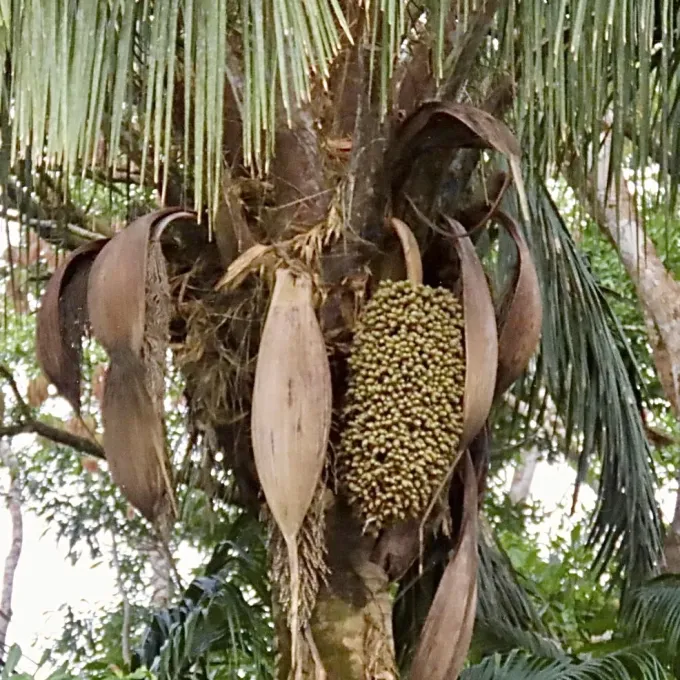
Description
Growing requirements
Attalea butyracea is a prominent palm species belonging to the Arecaceae family. Native to tropical regions of Central and South America, it is highly valued for its agricultural and ecological significance.
The plant thrives in tropical climates characterized by high humidity and consistent temperatures. It does not possess any frost tolerance, limiting its cultivation to frost-free tropical environments where it can reach its full growth potential.
Soil requirements focus on deep, fertile, and well-drained substrates. While the palm is hardy, it shows optimal performance in environments where moisture is retained but waterlogging is avoided through natural drainage or site preparation.
Light requirements for this species are high. It is categorized as a light-demanding plant, which means that canopy management in agroforestry systems is essential to ensure that saplings receive enough sunlight for rapid development.
Standard agronomic practices involve maintaining clean ground around the base of the palms during their juvenile stage to prevent competition from invasive grasses and weeds for nutrients and water.
Yield
The primary economic output of Attalea butyracea is its oil-rich fruit. The oil is extracted for both food-grade consumption and industrial applications, including the manufacture of soaps and lubricants.
In addition to oil, the tree provides significant biomass. The large, fibrous leaves are durable and widely used in rural construction for thatching roofs, providing a sustainable resource for local infrastructure.
Yield stabilization is achieved through systematic harvesting schedules. As the trees age, they become more productive, assuming they are provided with adequate spacing and periodic fertilization to replace soil nutrients.
The residue from fruit processing serves as a high-protein feed for livestock. This creates a circular economy model where every part of the harvested crop contributes to the total farm output.
The sustainability of the crop is linked to its long life span. Once established, these palms can provide yields for decades, requiring minimal replanting compared to annual row crops.
Main diseases and pests
The most severe threats are palm weevils, which bore into the stem and heart of the tree. These pests can destroy the apical meristem, leading to the rapid decline and eventual death of the palm.
Fungal diseases, often triggered by excessive moisture, can impact the root system and foliage. Proper sanitation and spacing are the primary methods for reducing the impact of these pathogens.
- Palm weevil infestations
- Root rot caused by waterlogging
- Leaf spot diseases
- Nutrient imbalance in low-fertility soils
Effective pest management relies on early detection. Scouting for signs of boring activity and removing infested trees are standard protocols to prevent the spread of weevil populations across the plantation.
Integrated pest management (IPM) strategies, including the use of entomopathogenic fungi and pheromone-baited traps, are recommended to protect the palms while minimizing the ecological footprint.