
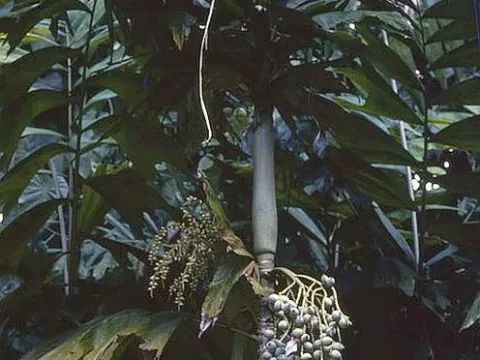
Brassiophoenix
Brassiophoenix
Brassiophoenix is a genus of flowering plants in the Arecaceae family. Native to the tropical rainforests of Papua New Guinea, these palms are highly sought after by collectors for their slender stature and graceful, feathery foliage.
What the section contains


Brassiophoenix
The plant typically features a solitary, ringed trunk and long pinnate leaves that can reach several feet in length. It serves as an excellent ornamental specimen in tropical gardens or climate-controlled interior spaces.
Optimal growth requires consistent warmth, ideally between 20°C and 28°C. Being a tropical species, it lacks cold tolerance and should be protected from any temperatures dropping below 15°C.
A well-draining, nutrient-rich potting mix is essential for this palm. It prefers high humidity and should be placed in a location with bright, filtered light to mimic the dappled light of the rainforest canopy.
Regular watering is necessary to keep the soil consistently moist but never waterlogged. Overwatering can lead to rapid root degradation, so using a container with efficient drainage holes is mandatory.
Scale insects and spider mites are the most common pests that affect Brassiophoenix, often appearing when the ambient air becomes too dry or stagnant.
Root rot, caused by pathogens like Phytophthora, is a frequent threat when the soil remains too wet for extended periods, suffocating the roots.
Leaf spot diseases can occur due to poor air circulation, necessitating a well-ventilated environment to maintain the health and appearance of the foliage.
Integrated pest management, including regular foliage inspection and the use of insecticidal soaps, is the recommended approach for controlling infestations.
To prevent disease spread, it is crucial to sterilize pruning tools and avoid overhead watering, which keeps the leaf surfaces wet for prolonged periods.