
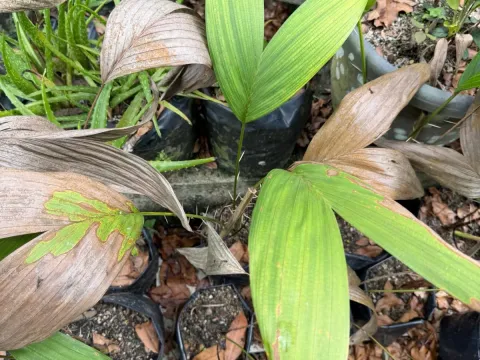
Eleiodoxa
Eleiodoxa
Eleiodoxa is a genus of palms in the Arecaceae family, primarily represented by the species Eleiodoxa conferta. This plant is native to the swampy tropical forests of Southeast Asia, including regions in Thailand, Malaysia, and Indonesia, where it thrives in water-saturated environments.
What the section contains

Eleiodoxa
The cultural requirement for this plant is strictly aquatic or semi-aquatic. Unlike many commercial palms, Eleiodoxa requires constant soil moisture and high humidity levels, mirroring its natural habitat in peat swamp forests and river floodplains.
Botanically, it is a clump-forming palm, often lacking a visible trunk above ground. It produces large, pinnate leaves with spiny petioles, which serve as a primary defense mechanism against herbivores in its dense, competitive jungle habitat.
Optimal growth conditions involve acidic, organic-rich soils that remain waterlogged throughout the year. The palm performs best under partial shade, as it is adapted to the understory light conditions of its native tropical rainforests.
Economic importance is centered on its edible fruit, which is harvested by local populations. The fruits are known for their acidic, tangy flavor and are frequently utilized in traditional culinary applications, such as the preparation of regional spicy relishes and preserves.
The harvesting process involves hand-picking the fruiting clusters once they reach maturity. Because the plant grows in muddy, bog-like conditions, the harvest is labor-intensive and typically performed manually by local collectors using traditional methods.