
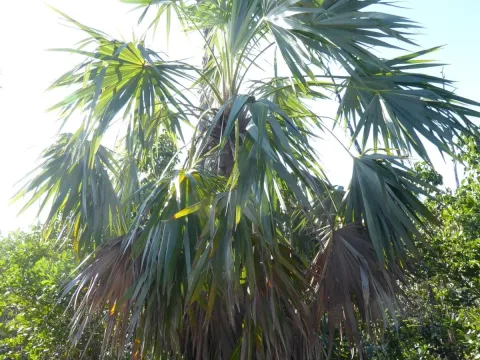
Leucothrinax
Leucothrinax
Leucothrinax is a genus of flowering plants in the palm family, Arecaceae. It is native to the Caribbean region, particularly the islands of Cuba, Hispaniola, and Puerto Rico, where it thrives in rocky, limestone-based habitats.
What the section contains

Leucothrinax
This palm requires a tropical climate with high ambient humidity and plenty of direct or filtered sunlight. It is sensitive to frost and sudden temperature drops, which can severely damage its foliage and growth rate.
Soil requirements for Leucothrinax focus on excellent drainage. In its natural environment, it grows well in thin, well-draining soils, meaning gardeners must replicate these conditions using sandy or rocky substrate mixes.
The botanical structure consists of a single, sturdy trunk topped with fan-shaped leaves that often exhibit a distinct silvery-white underside. This aesthetic feature makes it highly valued in landscaping for tropical climates.
Maintenance involves routine watering during the warm season, allowing the soil to dry out slightly between waterings. Fertilization with a specialized palm formula ensures the plant receives necessary nutrients for foliage density.
Spider mites are common pests that thrive in dry conditions and can cause significant damage to the leaf tissue. Maintaining adequate humidity levels is the primary cultural practice to prevent infestations.
Scale insects frequently attach themselves to the stems and leaf undersides, extracting sap and weakening the plant. Regular monitoring and application of horticultural oils help keep these populations under control.
Fungal leaf spot diseases may appear during periods of poor air circulation and excessive moisture. Improving ventilation and avoiding overhead irrigation are essential for preventing the spread of these pathogens.
Root rot is a critical threat caused by waterlogged soil conditions. Proper container drainage and avoiding heavy, moisture-retentive soils are vital for the long-term survival of the palm.
Mealybugs can cluster in the sheltered areas of the crown and leaf bases, causing stunted growth. Manual removal combined with systemic insecticides is usually effective in treating affected specimens.