
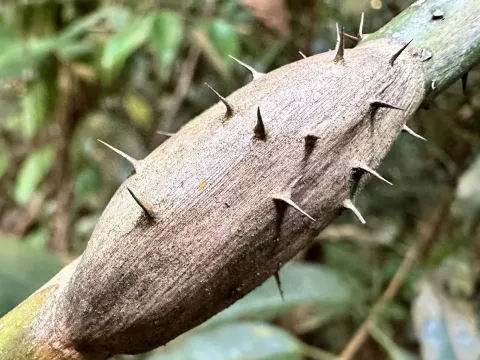
Korthalsia
Korthalsia
Korthalsia is a genus of climbing palms belonging to the Arecaceae family, primarily native to the humid tropical forests of Southeast Asia. These plants are characterized by their rapid vertical growth and climbing habits.
What the section contains


Korthalsia
The culture requires a tropical climate with high humidity levels and constant temperatures, usually between 24°C and 30°C. They thrive in rich, loamy soils that provide sufficient nutrients while maintaining excellent drainage.
As climbing plants, Korthalsia species depend on existing forest structures or artificial supports to reach the canopy. Successful cultivation relies on replicating this vertical growth environment.
Botanically, they are identified by their pinnate leaves with specialized, hook-like cirri at the ends, which allow the plant to latch onto surrounding trees and climb effectively.
The primary economic use is the production of high-quality rattan. The stems are harvested for their strength and flexibility, becoming a staple material for global furniture and handicraft industries.
Major threats to Korthalsia crops include palm weevils, which bore into the stem and disrupt nutrient flow, often leading to the death of the main stalk.
Fungal diseases are a significant risk factor in high-density plantations where poor ventilation and excessive moisture create a breeding ground for pathogens that rot the stems.
Rodents and other small mammals can cause mechanical damage to the base of the stems, making them susceptible to secondary infections and reducing their market value.
Sustainable management practices, such as clearing debris and ensuring proper spacing between plants, are essential to mitigate these biological threats without over-relying on pesticides.
Monitoring for signs of stress, such as leaf discoloration or wilting, is crucial for timely intervention and preservation of the crop's health.
Harvesting Korthalsia is a precise process that involves selecting mature stems that have reached the desired diameter and structural integrity, typically after 5–7 years.
The stems are cut at the base and carefully extracted from the forest canopy to minimize damage to the remaining plant and surrounding environment.
Immediately after cutting, the outer layer and thorny sheaths must be removed to prevent rapid degradation and to prepare the raw material for processing.
Post-harvest treatment often involves boiling in oil or steam to remove natural waxes, improve flexibility, and provide a uniform aesthetic finish to the rattan canes.
Efficiency during the harvest stage is key to maintaining the durability of the fiber, as improper handling can cause splintering or reduce the tensile strength of the stems.