
Caryota cumingii
Caryota cumingii
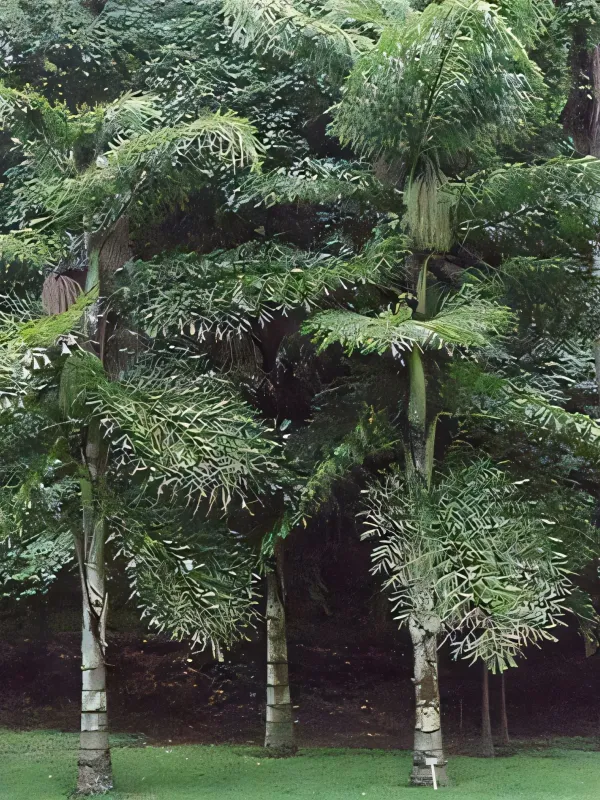
Description
Sowing dates
Caryota cumingii is propagated primarily through seeds, which require specific conditions to germinate successfully. Given that the seeds lose viability quickly, it is highly recommended to sow them immediately after harvesting for optimal results.
Before planting, seeds should be soaked in warm water for 24 to 48 hours to soften the hard outer coat and stimulate the embryo. They should then be placed in a sterile, well-draining substrate like a mix of peat moss and perlite to prevent damping off.
The planting container must be kept in a warm environment with temperatures consistently between 25 and 30 degrees Celsius. High humidity levels are crucial; thus, covering the tray with a clear plastic sheet or dome can help maintain the required moisture levels.
Germination is an slow process that may take anywhere from three months to over half a year. Growers must exercise patience and ensure the soil remains moist but never waterlogged during this entire period.
Once seedlings emerge and develop at least two true leaves, they should be carefully transplanted into small individual pots. Handling the fragile roots requires great care to ensure the long-term health of the young palm.
Growing requirements
As a member of the Arecaceae family, Caryota cumingii thrives in tropical climates similar to its native habitat in the Philippines. It prefers a stable environment free from sudden temperature drops and cold drafts.
The soil should be rich in organic matter and possess excellent drainage capabilities. A standard mix for palm trees, amended with some sand or gravel, provides the aeration necessary for healthy root development.
Light requirements involve bright, filtered sunlight. Exposure to direct midday sun can scorched the delicate, uniquely shaped leaves, while insufficient light leads to leggy growth and reduced plant vigor.
Consistent humidity is a fundamental requirement. If kept indoors, the plant benefits significantly from regular misting or the use of an electric humidifier to compensate for the drying effects of central heating systems.
During the growing season, from spring through early autumn, the palm benefits from bi-weekly applications of a balanced liquid fertilizer. Dilution should be monitored closely to prevent salt buildup in the soil, which can harm the roots.
Yield
Caryota cumingii is valued exclusively for its ornamental and landscaping applications. It is not cultivated for agricultural yield, food, or fiber production, serving instead as a decorative element in botanical gardens and interior design.
The plant's distinctive, bipinnate leaves, which resemble a fishtail, make it a highly sought-after specimen for tropical garden themes. It is often used as a feature plant in large commercial spaces or conservatories.
In terms of production, commercial nurseries focus on supplying healthy, well-shaped specimens to the market. Growth is steady, and high-quality specimens are often priced based on their height and the symmetry of their leaf structure.
The plant contributes to the aesthetic value of urban greening projects, providing a sense of tropical lushness. While not a crop in the traditional sense, its "yield" is measured in decorative output and environmental enrichment.
Successful long-term cultivation rewards the grower with a unique plant that serves as a focal point in any setting. Because of its specific aesthetic appeal, it remains a consistent favorite among palm enthusiasts worldwide.
Main diseases and pests
Spider mites represent a major threat, particularly in environments with low humidity. These pests feed on the underside of the foliage, leaving fine webbing and causing the leaves to appear stippled and discolored.
Scale insects and mealybugs are also common pests that can infest the palm. They hide in leaf axils, sucking plant juices and weakening the specimen, which often leads to the growth of sooty mold on the honeydew they secrete.
Root rot is the most common disease, resulting from overwatering or poorly draining soil. This condition is often fatal, as the root system decays, preventing the palm from absorbing the necessary water and nutrients.
Fungal leaf spots can occur when air circulation is poor and leaves remain wet for extended periods. Pruning affected leaves and improving environmental hygiene are essential steps in managing these outbreaks.
- Spider mites
- Scale insects
- Mealybugs
- Root rot
- Fungal leaf spot