
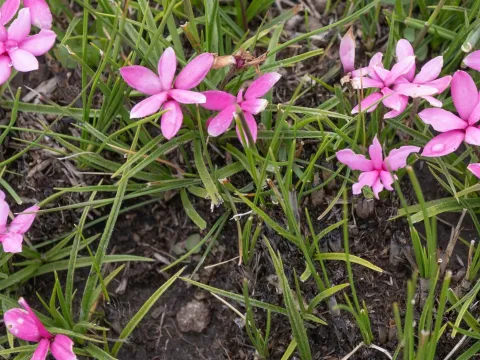
Rhodohypoxis
Rhodohypoxis
Planting Rhodohypoxis is best performed in the spring once the danger of night frost has passed and the soil has warmed up sufficiently. The ideal time for planting rhizomes or potted specimens is typically late April or May.
What the section contains


Rhodohypoxis
When propagating via seeds, sow them during the winter season in a protected environment. Seeds require cold stratification to improve germination rates, so place them in a cool location immediately after sowing in trays.
The depth of planting should be approximately 3 to 5 centimeters. It is crucial to avoid planting them too deep, which can lead to the rotting of growth points, particularly in heavy or dense soil types.
Maintain a spacing of 10 to 15 centimeters between plants when grouping them. This spacing ensures proper air circulation, which is essential to prevent the development of fungal diseases caused by overcrowded foliage.
In regions with colder climates, it is recommended to grow Rhodohypoxis as a container plant. This allows gardeners to move the pots into a frost-free shelter before the start of the vegetative stage.
Rhodohypoxis, a member of the Hypoxidaceae family, originates from the mountain regions of South Africa. It is a miniature herbaceous perennial that forms dense mats of narrow, lance-shaped leaves.
The culture requires well-drained, porous soil with an acidic to neutral pH level. Stagnant water is strictly prohibited, as it leads to rapid decay of the root system, which is highly sensitive to excessive moisture.
The plant thrives in sunny locations with light shade during the hottest hours of the day. Under these conditions, with adequate moisture, Rhodohypoxis produces its most intense blooms and vibrant petal coloration.
Watering requirements remain moderate throughout the growing season. The soil should remain slightly moist but never waterlogged; once the foliage begins to die back in autumn, irrigation should be almost entirely discontinued.
Climate preferences are restricted to temperate zones with mild winters. In open ground, the plant requires reliable winter protection, whereas in colder areas, it must be lifted or kept in a climate-controlled greenhouse.
The primary threat to the health of Rhodohypoxis is fungal infection caused by substrate overwatering. Root rot can destroy a plant within a short timeframe if the watering schedule is not strictly managed.
Pests such as spider mites may infest the foliage during hot and dry spells, especially when kept in greenhouses. Regular inspection of the undersides of leaves is essential for early detection and control.
Slugs and snails pose a significant risk to young shoots during the spring season. These pests can cause severe damage to the leaf structure, significantly weakening the plant's overall vitality and resilience.
To prevent the spread of diseases, it is vital to ensure excellent drainage and avoid wetting the foliage during watering. We recommend using high-quality, pre-sterilized substrate for all planting operations.
Preventative applications of broad-spectrum fungicides in early spring help maintain the aesthetic appeal of the plantings until the end of the season, which is particularly beneficial for indoor or container cultivation.