
Fishtail palm
Caryota mitis
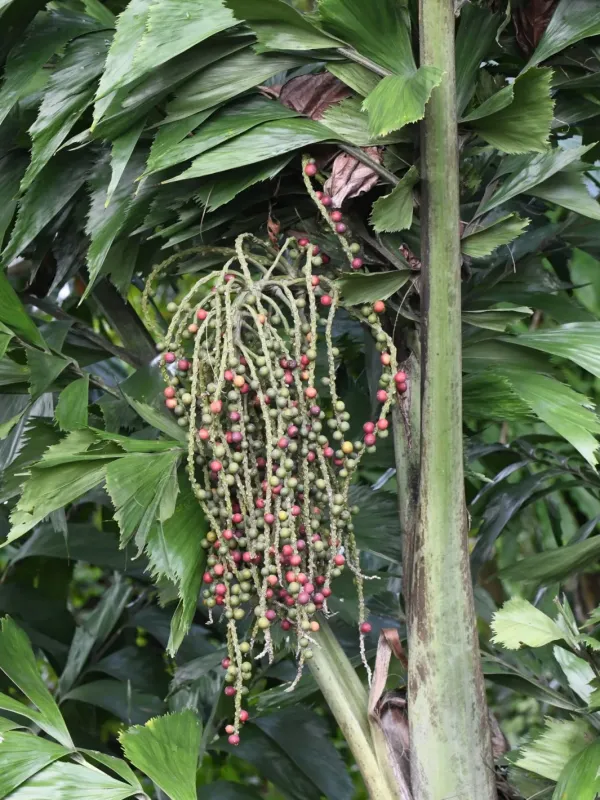
Description
Growing requirements
Caryota mitis, commonly known as the fishtail palm, belongs to the Arecaceae family and is native to the tropical regions of Southeast Asia. It is a clustering palm, meaning it develops multiple stems from a single root system, creating a dense and attractive appearance.
The plant is characterized by its distinct bipinnate leaves with jagged, fish-fin shaped leaflets. This unique morphology makes it a highly sought-after specimen for both indoor and outdoor tropical landscaping projects.
Regarding climate, Caryota mitis thrives in high-humidity environments with temperatures consistently between +20°C and +28°C. It is highly sensitive to cold drafts and temperatures dropping below +15°C, which can significantly stunt growth or cause leaf damage.
The soil requirements involve a well-draining, nutrient-rich substrate, ideally a mix of peat moss, perlite, and pine bark. Proper drainage is critical as the palm cannot tolerate "wet feet" and is susceptible to root decay if kept in waterlogged conditions.
This palm prefers bright, indirect light. While it can adapt to lower light conditions in interior settings, consistent growth and foliage density are best maintained under filtered sunlight in a controlled greenhouse environment.
Yield
The economic value of Caryota mitis lies primarily in the ornamental horticulture market. It is widely produced in nurseries for commercial real estate decoration and luxury landscaping.
Yield, in this context, refers to the production of healthy, mature specimens that meet market standards for foliage quality and height. A well-managed nursery can produce marketable palm clusters within a span of 24 to 36 months from seedling stage.
Cultivation requires regular fertilization with balanced NPK formulas, specifically during the growing season, to maintain the deep green color of the leaflets and encourage the development of new basal suckers.
While some traditional uses include fiber extraction or starch production in local village settings, commercial agricultural efforts are focused almost exclusively on the plant's aesthetic utility and nursery distribution.
Efficiency in production is increased by optimizing the greenhouse spacing, which allows for proper airflow around the fronds and reduces the risk of overcrowding-induced plant stress.
Main diseases and pests
Common pests affecting Caryota mitis include spider mites, scale insects, and mealybugs. These pests thrive in dry conditions, making humidity management a form of pest prevention.
Root rot is the most serious disease risk, often caused by overwatering or poor-quality potting media. Once established, the fungus can rapidly destroy the vascular system of the palm clusters.
To prevent these threats, growers should implement a strict sanitation schedule, including the sterilization of tools and regular inspection of the lower leaf surfaces where pests typically congregate.
If an infestation occurs, horticultural oils or systemic insecticides must be applied carefully to ensure complete coverage without causing phytotoxicity to the delicate leaflets.
General plant health is supported by ensuring adequate ventilation, which helps to keep foliage dry after misting and prevents the spread of opportunistic fungal spores within the greenhouse.