
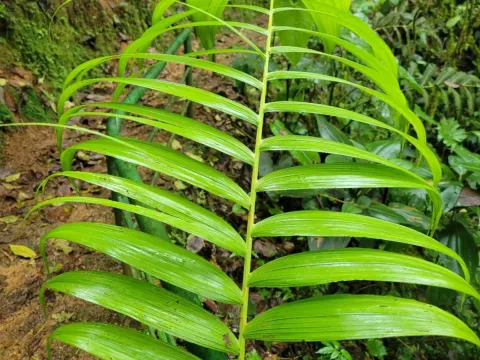
Chamaedorea
Chamaedorea
Chamaedorea is a genus of small, shade-loving palms belonging to the Arecaceae family. They are native to the tropical forests of Central and South America, where they grow in the understory.
What the section contains


Chamaedorea
In cultivation, these plants thrive in bright, indirect light. Direct sunlight is detrimental, as it causes leaf scorching and severe dehydration of the foliage.
The soil should be well-draining, slightly acidic, and rich in organic matter. A mixture of peat, perlite, and bark is typically used to ensure adequate aeration and root health.
Consistent moisture is required, but the substrate must never be waterlogged. High humidity levels are essential for healthy growth and preventing leaf tip browning.
Propagation is primarily achieved via seeds, which require warmth and high moisture levels to germinate. Growth is generally slow compared to other ornamental palm species.
Spider mites are the most common pests affecting Chamaedorea, especially in low-humidity environments where they can rapidly infest the undersides of leaves.
Root rot, caused by overwatering and poor drainage, is a critical threat that leads to systemic decay and potential plant loss if not addressed immediately.
Mealybugs are another frequent issue, hiding in the crown or leaf axils and extracting nutrients, which leads to stunted growth and yellowing.
Fungal leaf spot diseases may occur under conditions of poor air circulation and excessive moisture, requiring careful pruning and fungicide applications.
Scale insects can attach to the stems and fronds, causing significant damage over time if not physically removed or controlled with horticultural oils.