
Calamus discolor
Calamus discolor
Description
Growing requirements
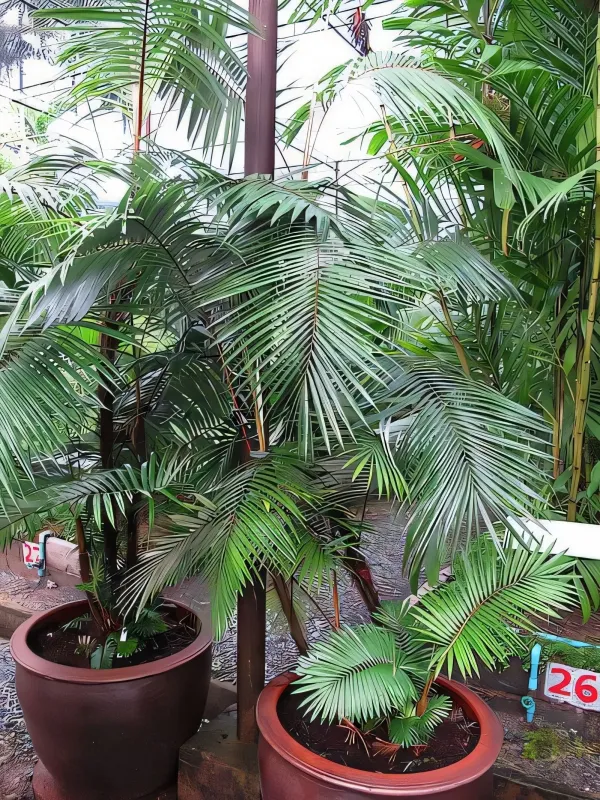
Calamus discolor is a species of tropical climbing palm belonging to the Arecaceae family. Native to the Philippines, it thrives in dense rainforest environments, where it naturally colonizes areas with nutrient-rich soils and high humidity.
The plant grows as a liana, utilizing specialized spines on its pinnate leaves to scramble over other vegetation. This climbing habit allows the plant to reach the light levels required for photosynthesis in the canopy.
Cultivation of this species requires strict adherence to tropical climatic conditions. Constant high temperatures, ideally above 18 degrees Celsius, and significant atmospheric moisture are essential for vigorous growth.
The soil should be well-drained but consistently moist, rich in organic matter to mimic the forest floor environment. Proper substrate selection prevents root rot while ensuring adequate nutrient availability for the rapid elongation of stems.
Economically, this plant is cultivated as a sustainable source of rattan. Its stems are processed for use in furniture making, basket weaving, and architectural design due to their remarkable flexibility and tensile strength.
Main diseases and pests
Fungal infections pose a significant risk to Calamus discolor, particularly in settings with inadequate air circulation or chronic waterlogging. These conditions create an environment conducive to root and stem pathogens.
Pests such as spider mites and scale insects are common in commercial nurseries. They thrive in dry air conditions and feed on the sap of young shoots, which can severely stunt the plant's growth.
Effective management involves monitoring plant health and implementing environmental controls to deter pest infestation, such as maintaining optimal humidity levels and ensuring proper airflow between individual plants.
In cases of severe infestation, targeted biological or chemical treatments may be necessary to protect the primary stem tissue, which serves as the ultimate harvestable commodity.
Quarantine and inspection protocols are essential for maintaining the health of a plantation, preventing the spread of localized diseases that could devastate a nursery's output.
Harvesting
Harvesting involves the selective cutting of mature stems that have reached the required diameter and length. The process demands precision to ensure the longevity of the plant base for future regeneration.
Post-harvest processing includes stripping away the spiny leaf sheaths and cleaning the stem. The raw material is then dried under controlled conditions to stabilize its structure and enhance its flexibility.
Techniques such as steam bending or sun drying are applied depending on the intended final product, whether it is for delicate weaving or structural furniture framing.
Proper harvesting timing is critical; stems harvested too early lack the necessary strength, while those left too long may become overly brittle or susceptible to wood-boring insects.
By effectively managing the growth cycle and harvest timing, farmers can produce high-quality rattan products that meet international market standards for durability and finish.