
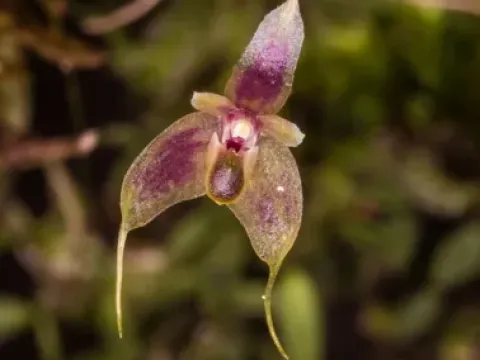
Bulbophyllum
Bulbophyllum
Bulbophyllum is the largest genus in the Orchidaceae family, containing thousands of species characterized by a sympodial growth habit. They originate from tropical and subtropical regions across the globe, predominantly found in rainforests as epiphytes or lithophytes.
What the section contains
 Bulbophyllum acutiflorum
Bulbophyllum acutiflorum
Bulbophyllum acutiflorum
 Bulbophyllum affine
Bulbophyllum affine
Bulbophyllum affine
 Bulbophyllum ambrosia
Bulbophyllum ambrosia
Bulbophyllum ambrosia
 Bulbophyllum apodum
Bulbophyllum apodum
Bulbophyllum apodum
 Bulbophyllum barbigerum
Bulbophyllum barbigerum
Bulbophyllum barbigerum
 Bulbophyllum beccarii
Bulbophyllum beccarii
Bulbophyllum beccarii
 Bulbophyllum butingui
Bulbophyllum butingui
Bulbophyllum butingui
 Bulbophyllum cheiri
Bulbophyllum chimaera
Bulbophyllum chimaera
Bulbophyllum cheiri
Bulbophyllum cheiri
Bulbophyllum chimaera
Bulbophyllum chimaera
 Bulbophyllum chlorascens
Bulbophyllum chlorascens
Bulbophyllum chlorascens
 Bulbophyllum clandestinum
Bulbophyllum clandestinum
Bulbophyllum clandestinum
 Bulbophyllum cochleatum
Bulbophyllum cochleatum
Bulbophyllum cochleatum
 Bulbophyllum colubrinum
Bulbophyllum colubrinum
Bulbophyllum colubrinum
 Bulbophyllum distans
Bulbophyllum distans
Bulbophyllum distans
 Bulbophyllum drymoglossum
Bulbophyllum drymoglossum
Bulbophyllum drymoglossum
 Bulbophyllum elegantulum
Bulbophyllum elegantulum
Bulbophyllum elegantulum
 Bulbophyllum falcatum
Bulbophyllum falcatum
Bulbophyllum falcatum
 Bulbophyllum fimbriatum
Bulbophyllum fimbriatum
Bulbophyllum fimbriatum
 Bulbophyllum flabellum-veneris
Bulbophyllum flabellum-veneris
Bulbophyllum flabellum-veneris
 Bulbophyllum globuliforme
Bulbophyllum globuliforme
Bulbophyllum globuliforme
 Bulbophyllum graveolens
Bulbophyllum graveolens
Bulbophyllum graveolens
 Bulbophyllum imbricatum
Bulbophyllum imbricatum
Bulbophyllum imbricatum
 Bulbophyllum inconspicuum
Bulbophyllum inconspicuum
Bulbophyllum inconspicuum
 Bulbophyllum ivorense
Bulbophyllum ivorense
Bulbophyllum ivorense
 Bulbophyllum keekee
Bulbophyllum keekee
Bulbophyllum keekee
 Bulbophyllum kubahense
Bulbophyllum kubahense
Bulbophyllum kubahense
 Bulbophyllum laurentianum
Bulbophyllum laurentianum
Bulbophyllum laurentianum
 Bulbophyllum lilacinum
Bulbophyllum lilacinum
Bulbophyllum lilacinum
 Bulbophyllum lobbii
Bulbophyllum lobbii
Bulbophyllum lobbii
 Bulbophyllum mastersianum
Bulbophyllum mastersianum
Bulbophyllum mastersianum
 Bulbophyllum maxillare
Bulbophyllum maxillare
Bulbophyllum maxillare
 Bulbophyllum medusae
Bulbophyllum medusae
Bulbophyllum medusae
 Bulbophyllum membranaceum
Bulbophyllum membranaceum
Bulbophyllum membranaceum
 Bulbophyllum pachyrachis
Bulbophyllum pachyrachis
Bulbophyllum pachyrachis
 Bulbophyllum phalaenopsis
Bulbophyllum phalaenopsis
Bulbophyllum phalaenopsis
 Bulbophyllum polliculosum
Bulbophyllum polliculosum
Bulbophyllum polliculosum
 Bulbophyllum pygmaeum
Bulbophyllum pygmaeum
Bulbophyllum pygmaeum
 Bulbophyllum rothschildianum
Bulbophyllum rothschildianum
Bulbophyllum rothschildianum
 Bulbophyllum saltatorium
Bulbophyllum saltatorium
Bulbophyllum saltatorium
 Bulbophyllum sandersonii
Bulbophyllum schinzianum
Bulbophyllum schinzianum
Bulbophyllum sandersonii
Bulbophyllum sandersonii
Bulbophyllum schinzianum
Bulbophyllum schinzianum
 Bulbophyllum singaporeanum
Bulbophyllum singaporeanum
Bulbophyllum singaporeanum
 Bulbophyllum sterile
Bulbophyllum sterile
Bulbophyllum sterile
 Bulbophyllum striatum
Bulbophyllum striatum
Bulbophyllum striatum
 Bulbophyllum thaiorum
Bulbophyllum thaiorum
Bulbophyllum thaiorum
 Bulbophyllum trigonopus
Bulbophyllum trigonopus
Bulbophyllum trigonopus
 Bulbophyllum tuberculatum
Bulbophyllum tuberculatum
Bulbophyllum tuberculatum
 Bulbophyllum vaginatum
Bulbophyllum vaginatum
Bulbophyllum vaginatum
 Bulbophyllum wendlandianum
Bulbophyllum wendlandianum
Bulbophyllum wendlandianum
Bulbophyllum
Cultivation requires strict adherence to environmental conditions, specifically maintaining humidity levels between 70% and 80%. High air circulation is mandatory to prevent the accumulation of moisture on the foliage and rhizomes, which can trigger rapid plant decay.
Temperature management is critical for successful cultivation, with most species thriving in a day range of 20–25°C. A nocturnal temperature drop is highly recommended as it simulates natural diurnal cycles and promotes the development of flower spikes in various species.
The potting medium must be extremely well-draining, consisting primarily of orchid bark, perlite, and occasional charcoal additions. Because these plants have sensitive roots, they require frequent but carefully monitored irrigation, allowing the substrate to slightly dry between watering sessions.
These plants are primarily cultivated by orchid enthusiasts and botanical gardens for their bizarre floral structures and diverse evolutionary strategies. While they have limited agricultural use, they are economically significant within the international trade of rare and specimen-grade ornamental plants.
Pest pressures primarily include red spider mites and aphids, which are common in indoor greenhouse settings. Controlling these pests requires consistent monitoring of the undersides of leaves and using appropriate acaricides or insecticidal soaps when initial signs of infestation appear.
Fungal infections, such as black rot or leaf spot, are prevalent in poorly ventilated environments. Proper disease management involves strict sanitization of growing tools, ensuring adequate space between plants, and applying systemic fungicides during the high-risk humid season.