
Bulbophyllum polliculosum
Bulbophyllum polliculosum
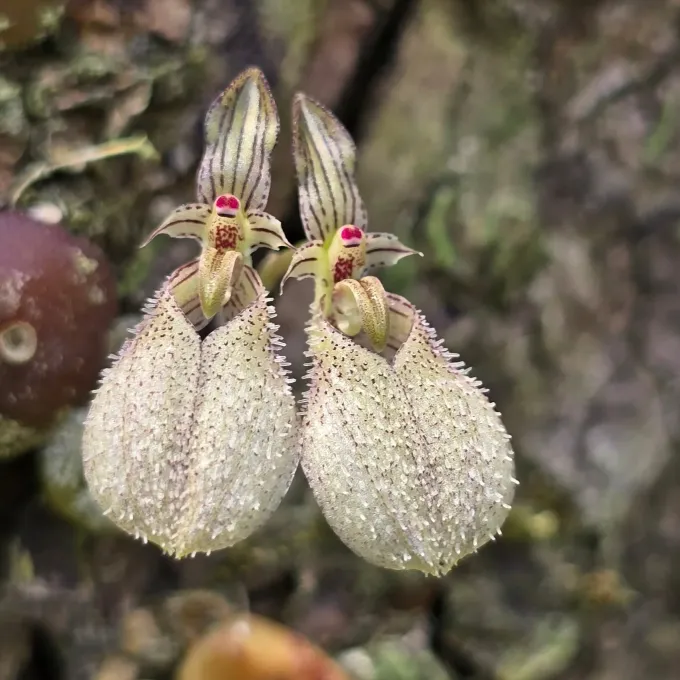
Description
Growing requirements
Bulbophyllum polliculosum is an epiphytic species belonging to the Orchidaceae family. It is native to the tropical regions of Southeast Asia, specifically inhabiting the canopy of dense forests where it thrives on tree trunks and branches under high atmospheric humidity.
In terms of cultivation, this species requires a stable environment mimicking its tropical origins. Humidity levels should be consistently maintained between 70% and 80%, as the plant relies on atmospheric moisture to support its metabolic processes throughout the growing season.
The ideal temperature regime for Bulbophyllum polliculosum involves a daytime average of 22-26 degrees Celsius, with a necessary drop during the night to promote healthy growth cycles and spike formation. Thermal stability is key to preventing stress.
Substrate composition must prioritize drainage and aeration. A mixture of fine bark, perlite, and charcoal is widely recommended to allow roots to breathe, as these orchids are highly susceptible to root suffocation if the substrate is too compact or waterlogged.
Lighting requirements are strict, favoring bright, filtered light. Exposure to direct intense sunlight can be detrimental, leading to chlorosis and leaf desiccation, while insufficient light levels will significantly reduce the vigor and bloom potential of the plant.
Main diseases and pests
The primary threats to this orchid culture include fungal pathogens such as Pythium and Phytophthora, which cause root and bulb rot. These infections are almost always the result of overwatering or inadequate air circulation around the root zone.
Pests such as scale insects and spider mites are frequent invaders in controlled environments. Scale insects often hide in the crevices of the pseudobulbs, while mites prefer the underside of leaves, sucking sap and weakening the plant's structural integrity.
Bacterial soft rot is another severe condition that can wipe out a specimen in a matter of days. It is characterized by a foul-smelling, mushy decay of the tissue, usually triggered by stagnant humidity and high temperatures combined with poor airflow.
To mitigate these risks, integrated pest management (IPM) practices are essential. Regular scouting, application of appropriate fungicides or insecticides, and quarantine protocols for new plants are standard procedures in any professional collection.
Environmental control remains the most effective prophylactic measure. Ensuring rapid drying of leaf surfaces after watering and maintaining optimal air exchange rates helps to minimize the pressure from opportunistic diseases and common pests.