
Bulbophyllum singaporeanum
Bulbophyllum singaporeanum
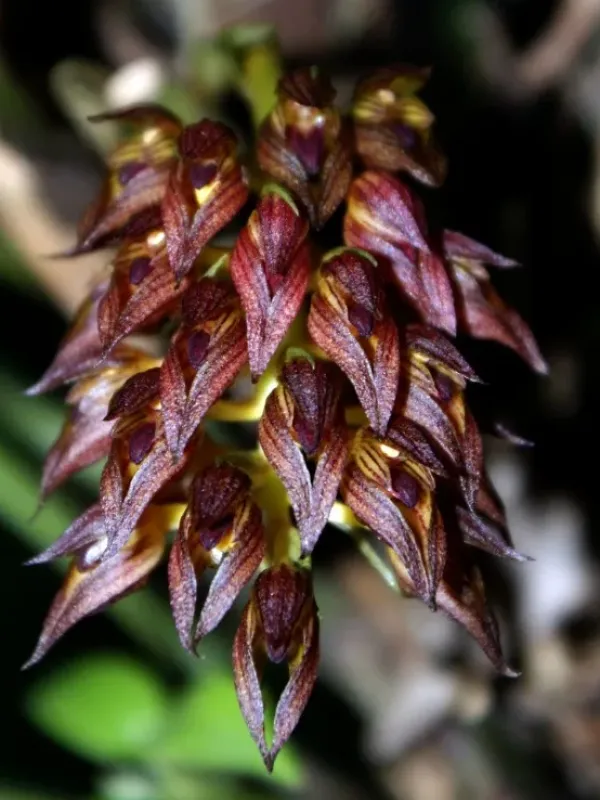
Description
Growing requirements
Bulbophyllum singaporeanum is an epiphytic orchid species belonging to the Orchidaceae family, native to the tropical rainforests of Southeast Asia, particularly Singapore and Malaysia. It is a highly specialized plant that grows on the bark of host trees rather than in soil.
To cultivate this species successfully, it requires high humidity levels, ideally maintained between 70% and 80%. The ambient temperature should mirror its natural habitat, with daytime highs around 24–28 degrees Celsius and a moderate nighttime temperature drop to encourage healthy growth.
The choice of substrate is critical; a mixture of medium-grade pine bark, charcoal, and sphagnum moss works best to allow for drainage and aeration. Because epiphytes are sensitive to root rot, pots must provide excellent air circulation around the root ball at all times.
Indirect light is essential for Bulbophyllum singaporeanum, as direct exposure to harsh sun will scorch the leaves and permanently damage the plant. A location with bright, filtered light is ideal, and using curtains or specialized shading materials in a greenhouse is recommended.
Watering should be performed consistently, ensuring the substrate remains damp but never soggy. Feeding during the growing season with a balanced, diluted orchid fertilizer will provide the necessary nutrients for robust pseudobulb development and consistent blooming cycles.
Main diseases and pests
Root rot and stem decay are the primary health risks for Bulbophyllum singaporeanum, often caused by stagnant water or inadequate airflow. If decay occurs, it is essential to trim affected parts with sterile tools and adjust the watering frequency to improve aeration.
Pests such as spider mites, mealybugs, and scale insects frequently target this orchid, especially if the air humidity is too low. Regularly cleaning the leaves and applying appropriate horticultural oils or systemic insecticides helps keep these populations under control.
Fungal leaf spot diseases may appear if water remains on the foliage for extended periods. Promoting good air movement within the growing area, such as using small fans in an orchid house, is a standard agronomic practice to mitigate this risk and maintain plant health.
Viruses are a silent threat that can devastate an entire orchid collection. Since there are no cures for these pathogens, preventative measures such as quarantine for new specimens and consistent disinfection of tools are crucial for maintaining a healthy nursery environment.
Finally, keeping an eye on the pseudobulbs is vital; they serve as energy reserves for the plant. If they appear shriveled or discolored, it indicates improper water intake or root issues that require immediate intervention to save the specimen from further decline.