
Bulbophyllum affine
Bulbophyllum affine
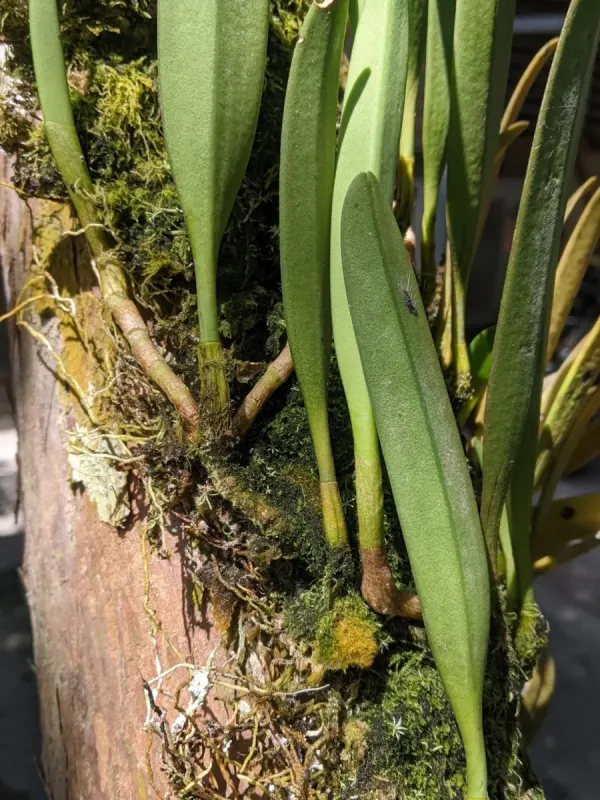
Description
Growing requirements
Bulbophyllum affine is a distinct species of epiphytic orchid belonging to the Orchidaceae family. It is native to the tropical forests of Southeast Asia, where it grows in habitats that require consistent humidity and moderate ambient temperatures throughout the year.
Botanically, this species is characterized by its creeping rhizomes and small, cone-shaped pseudobulbs. Each pseudobulb supports a single, leathery, oblong leaf, which is a structural adaptation allowing the plant to store essential moisture during drier periods.
For successful cultivation, the plant requires a highly permeable substrate, typically consisting of bark chips, charcoal, and moss. Proper aeration of the root system is critical, as these plants are extremely sensitive to stagnant moisture and root suffocation.
Lighting requirements involve bright, indirect light. Exposure to direct sunlight must be strictly avoided, as it causes severe tissue damage to the leaves. Ideally, the plant should be placed in a location with filtered light similar to its natural forest canopy habitat.
Temperature management should maintain a range of 20°C to 25°C. A consistent ventilation system is essential to simulate the natural airflow of its native environment, which helps in preventing the buildup of humidity-related pathogens in the orchid's micro-niche.
Main diseases and pests
The primary threats to Bulbophyllum affine are various types of root and pseudobulb rot, often induced by improper watering habits. If the substrate remains waterlogged, the roots become susceptible to fungal invasion, leading to rapid plant decline.
Common pests include spider mites and scale insects. These pests feed on the plant's sap, weakening the structure of the pseudobulbs and leaves, which can result in stunted growth and a significant reduction in the plant's overall aesthetic value.
Mealybugs are another frequent pest, often congregating in the crevices between pseudobulbs. They are difficult to eradicate due to their protective wax coating, requiring repeated applications of systemic insecticides or manual removal.
Fungal infections can also manifest as leaf spotting, which spreads rapidly if environmental conditions remain too stagnant. Utilizing fungicides containing active ingredients effective against botrytis and other orchid-specific fungi is often necessary.
Regular sanitation of the growing environment is the most effective management strategy. By keeping tools sterilized and monitoring the plant closely, growers can prevent the spread of diseases and maintain a healthy, thriving collection of this unique orchid species.