
Bulbophyllum striatum
Bulbophyllum striatum
Description
Growing requirements
Bulbophyllum striatum is an epiphytic orchid species belonging to the Orchidaceae family. It is native to the humid tropical forests of Asia, specifically observed in the Himalayan regions and India. As an epiphyte, the plant naturally grows on tree trunks, adapting to high atmospheric humidity and filtered sunlight.
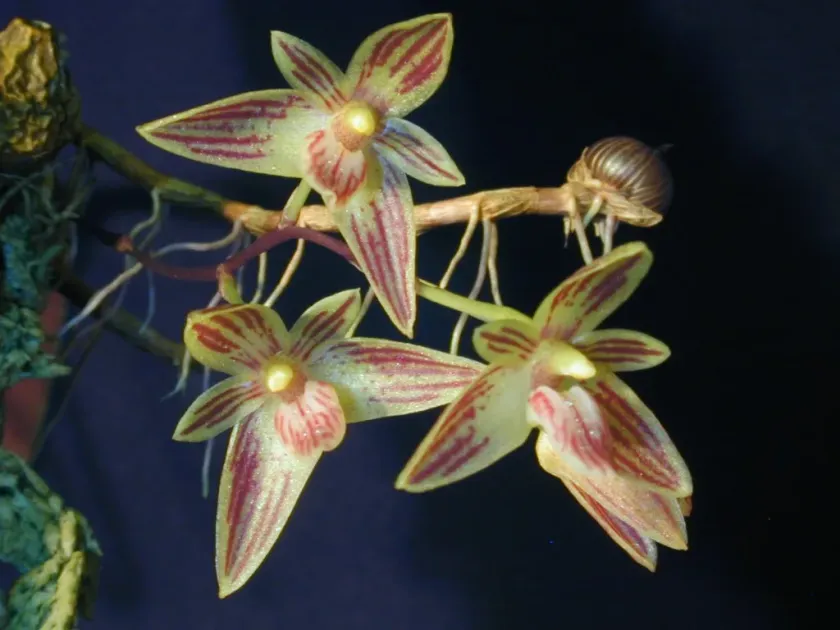
The botanical structure of this species features sympodial growth with distinct, relatively compact pseudobulbs. Each pseudobulb typically supports a single leathery leaf. The inflorescence arises from the base of the pseudobulb and is noted for its striped floral pattern, which is the primary characteristic that defines the species.
Environmental requirements for Bulbophyllum striatum include a stable temperature range between 18 and 24 degrees Celsius. It thrives in high-humidity environments where the air is constantly fresh. Maintaining adequate airflow is essential to mimic its natural habitat and prevent the proliferation of stagnant moisture.
For cultivation, a coarse, well-draining substrate is mandatory. A blend of conifer bark, charcoal, and a small portion of sphagnum moss provides the necessary aeration and moisture retention. The plant does not tolerate being waterlogged, so the potting medium must allow roots to dry out partially between watering cycles.
Standard agrotechnical practices involve scheduled misting and watering with high-quality, soft water. Fertilization should be performed sparingly, using balanced orchid-specific nutrients diluted to half or quarter strength. Consistent monitoring of the plant's health allows for adjustments based on seasonal changes in light and temperature.
Main diseases and pests
Common pests affecting this orchid include spider mites and scale insects, particularly in environments where humidity levels are not properly maintained. Regular cleaning of the leaves and environmental monitoring are recommended to prevent infestations from spreading throughout the collection.
Fungal pathogens and root rot represent the most serious threats to the plant's longevity. These issues are almost exclusively linked to poor cultural practices, such as excessive watering or inadequate drainage. If rot is suspected, immediate remediation involving substrate replacement and the excision of decaying tissues is necessary to save the specimen.