
California lady slipper
Cypripedium californicum
Description
Growing requirements
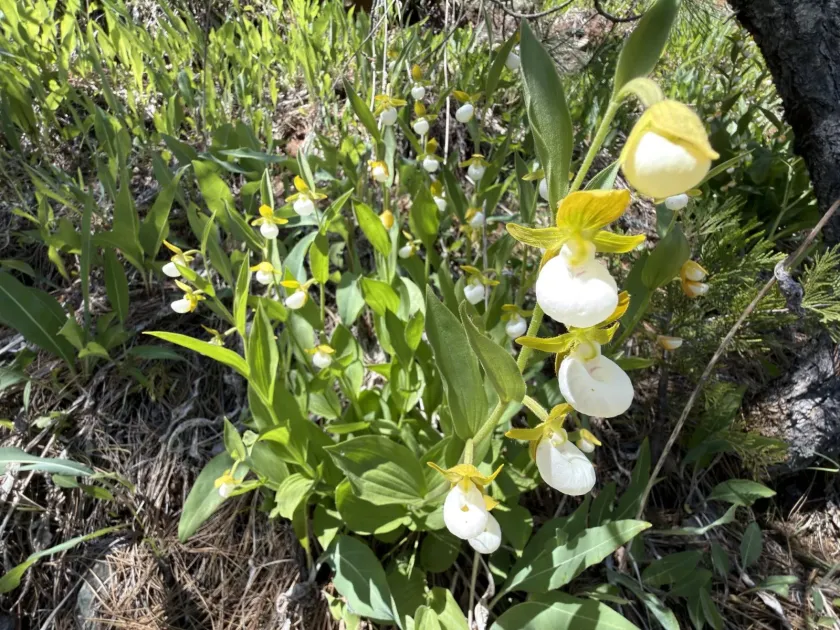
The California lady slipper (Cypripedium californicum) is a remarkable perennial member of the Orchidaceae family. Native to the specific coastal regions of northern California and southern Oregon, it is found in habitats characterized by serpentine seeps and moist, mineral-rich environments.
To successfully cultivate this species, one must replicate its natural hydrology. The plant thrives in areas with consistent moisture, provided there is enough water movement to maintain high oxygen levels in the root zone and prevent stagnant, anaerobic conditions.
The soil requirements are strict and revolve around the serpentine geology typical of its native range. Growers often prepare specialized substrates that are nutrient-poor but rich in magnesium and iron, maintaining a near-neutral to slightly alkaline pH balance.
Regarding climate, the species prefers cool to temperate conditions. It does not tolerate high heat or direct, intense midday sun, making it well-suited for sheltered garden sites or controlled greenhouse environments where light is effectively diffused.
The botanical structure of this orchid is distinct, as it produces a racemose inflorescence capable of bearing multiple flowers, sometimes up to fifteen per stem. This makes it a highly sought-after plant for conservationists and collectors focusing on rare North American flora.
Main diseases and pests
Root rot remains the most significant threat to the California lady slipper, usually triggered by poor drainage or overly organic, moisture-retentive soils. Maintaining a loose, inorganic potting mix is the primary defense strategy against these fungal issues.
Slugs and snails pose a severe risk during the spring growth phase. These pests can rapidly defoliate the plant, leading to significant physiological stress and failure to bloom. Physical barriers or organic molluscicides are standard in managing these infestations.
Sucking insects, such as aphids, can settle on the developing buds and flower stalks. Due to the delicate nature of the plant, intervention should be limited to gentle manual removal or the application of mild, non-toxic horticultural soaps.
Biological dependency on specific mycorrhizal fungi makes this species difficult to establish in sterile garden soil. Without the correct symbiotic fungi present, the plant may slowly decline as it cannot extract necessary nutrients effectively from the medium.
Human impact and improper site selection, such as planting in areas prone to drought or high temperature fluctuations, are major threats to long-term viability. Consistent site monitoring is essential to ensure the plant does not succumb to environmental stress.