
Bulbophyllum laurentianum
Bulbophyllum laurentianum
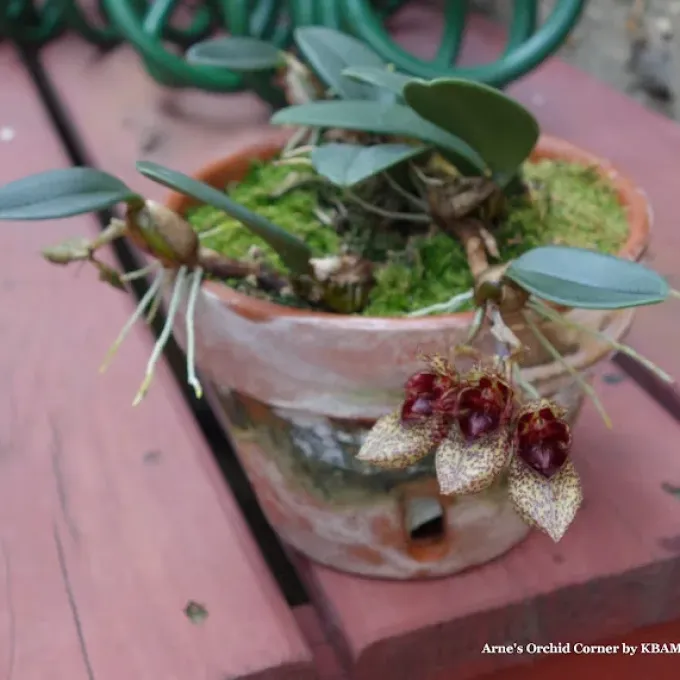
Description
Growing requirements
Bulbophyllum laurentianum is a fascinating epiphytic orchid species belonging to the Orchidaceae family. It is native to the tropical forests of Central Africa, where it thrives in humid conditions while anchored to the branches of trees.
The cultivation of this plant requires a stable, high-humidity environment, ideally maintained between 70% and 80%. It is a shade-loving species that grows best under diffused light, as direct sunlight can easily damage its leaves and pseudobulbs.
The temperature should remain within the range of +22°C to +26°C during the day. A slight cooling at night is beneficial, but the plant must be protected from temperatures dropping below +15°C, as this can stunt its growth and cause irreversible physiological damage.
Proper aeration is crucial for its root system, which is why potting in a coarse bark mixture or mounting on a cork slab is recommended. The substrate should be kept consistently moist but never waterlogged to ensure the roots receive both hydration and oxygen.
During the active growth phase, fertilization should be applied sparingly, using a diluted balanced orchid fertilizer. Over-fertilization can lead to root burn, so it is safer to apply lower doses at more frequent intervals to mimic natural nutrient availability.
Main diseases and pests
The most significant threats to Bulbophyllum laurentianum include root and crown rot, primarily caused by excessive watering or poor ventilation. These diseases can progress rapidly in humid conditions, often requiring immediate repotting.
Common insect pests include spider mites, which thrive in low-humidity conditions, and scale insects that can hide under leaf bases. Regular monitoring and physical removal of these pests are often effective if the infestation is caught early.
Mealybugs are another potential nuisance, sucking the sap and creating sticky deposits that attract sooty mold. Applying neem oil or appropriate systemic insecticides can effectively manage these populations while protecting the plant's delicate tissues.
Fungal infections can also occur if the leaves remain wet for too long without adequate air circulation. Ensuring that the foliage is dry before nightfall is a simple but effective preventive measure against fungal outbreaks.
Maintaining high hygiene standards in the growing area is essential. If a plant shows signs of systemic viral disease, such as streaking or distorted new growth, it should be isolated or removed to prevent the spread to other collections.