
Oncostele
x Oncostele J. M. H. Shaw
Description
Growing requirements
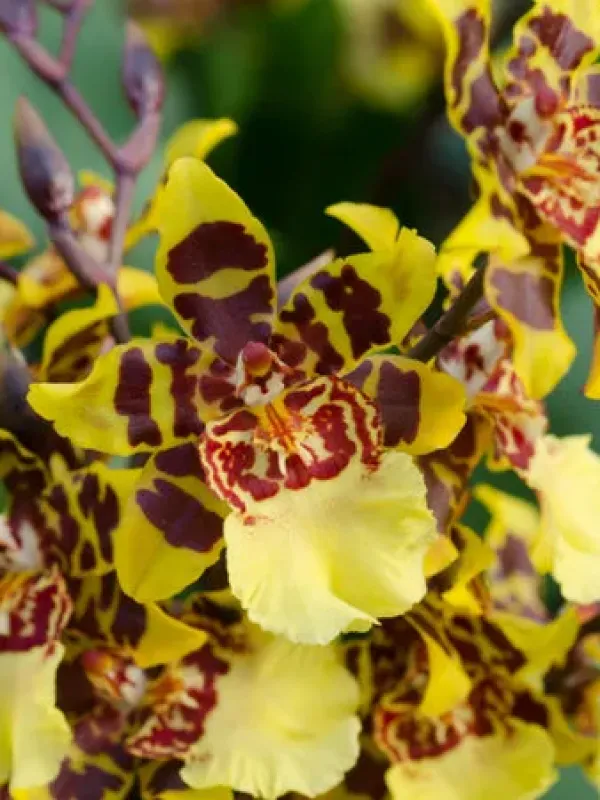
Oncostele is a popular intergeneric hybrid orchid belonging to the Orchidaceae family, created by crossing Oncidium with Miltonia or Miltoniopsis. These sympodial orchids are valued for their spectacular, often fragrant, multi-flowered inflorescences that can produce dozens of blooms in various color patterns.
The cultural requirements demand bright, indirect light to simulate the dappled sunlight of their natural tropical habitat. Direct sunlight can cause severe leaf scorch, while insufficient light will lead to weak growth and the failure of the plant to produce new spikes or flower shoots.
Temperature management is critical for Oncostele, which thrives in moderate environments. A distinct difference between day and night temperatures, ideally around 5-10 degrees Celsius, is necessary to induce flowering and maintain the metabolic health of the orchid throughout its growth cycle.
The substrate must be fast-draining to prevent root asphyxiation, as these orchids are sensitive to waterlogged conditions. A mix consisting of pine bark, perlite, and charcoal is standard for most potting situations, allowing sufficient airflow to reach the roots while maintaining necessary humidity.
Humidity levels should remain consistently between 60% and 75% to prevent the characteristic accordion-folding of the leaves. Frequent misting or the use of humidity trays filled with expanded clay pebbles can help maintain the required microclimate, especially during the dry winter months.
Main diseases and pests
Common pests affecting Oncostele include scale insects and spider mites, which can quickly colonize the base of pseudobulbs or the underside of leaves. Integrated pest management using horticultural soaps or targeted insecticides is recommended at the first signs of infestation to prevent rapid spread.
Pathogenic fungi and bacteria often exploit wounds or wet conditions, leading to pseudobulb rot or leaf spot diseases. Preventive care involves maintaining good air circulation around the foliage and ensuring the potting media is not breaking down, which keeps the root zone healthy and resistant to infections.