
Bulbophyllum drymoglossum
Bulbophyllum drymoglossum
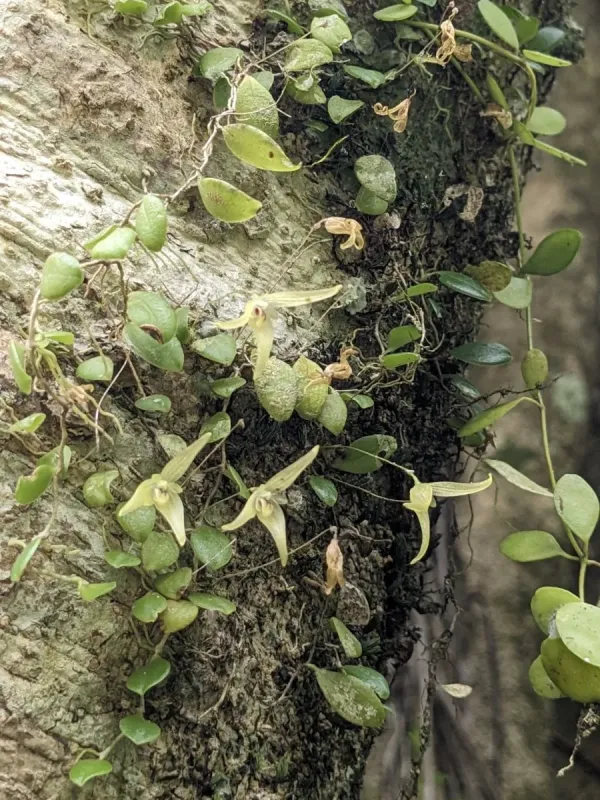
Description
Growing requirements
Bulbophyllum drymoglossum is a miniature epiphytic orchid belonging to the Orchidaceae family. It is native to East Asian regions, including parts of Japan, China, and Korea, where it primarily grows on tree trunks and rocky surfaces.
This species thrives in high humidity conditions, generally requiring 60–80% ambient humidity to mimic its natural forest habitat. A well-ventilated environment is essential to prevent moisture stagnation and promote healthy gas exchange for the roots.
Light requirements are focused on bright, indirect sun. The plant should be protected from harsh midday exposure, which can easily scorch its delicate foliage, causing irreversible damage to the plant's photosynthetic capacity.
Temperature management is crucial, with an ideal range of 20°C to 25°C during the day. During the winter, providing a slight cool-down period helps to encourage healthy dormancy and future flowering cycles.
As an epiphyte, it requires a specialized substrate such as tree bark or moss mounts. It should never be planted in standard dense soil, as its roots require substantial aeration to function correctly and avoid rot.
Main diseases and pests
Spider mites are the most common pests affecting this orchid, especially in dry environments. They often colonize the undersides of leaves, sucking sap and weakening the overall vigor of the plant.
Scale insects can also infest the stems. Due to the plant's small stature, these pests are often difficult to detect until a significant population has already established, requiring systemic treatment.
Root rot is the primary physiological threat associated with poor cultivation techniques. It typically occurs when the substrate remains waterlogged for extended periods, preventing the roots from accessing sufficient oxygen.
Fungal infections can develop if water accumulates in leaf axils during cooler times. Maintaining good air circulation is the most effective preventative measure against such diseases in a domestic setting.
Regular monitoring and physical cleaning of the foliage with a soft, damp cloth can help keep the plant free from pests and dust, ensuring that its natural defenses remain strong throughout the growth season.