
Bulbophyllum lobbii
Bulbophyllum lobbii
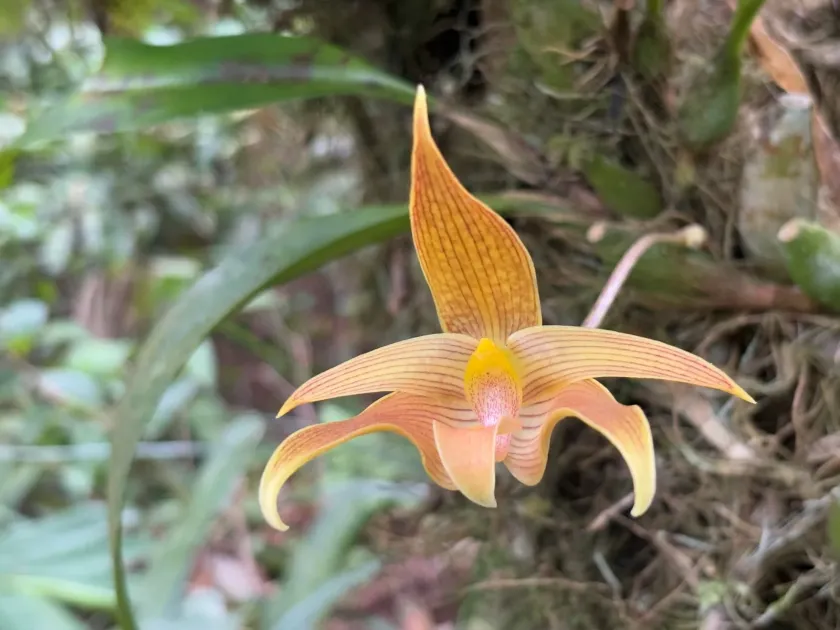
Description
Growing requirements
Bulbophyllum lobbii is a fascinating species from the Orchidaceae family, native to Southeast Asia. This epiphyte is commonly found in tropical rainforests, where it anchors itself to tree trunks and branches in areas with high canopy density.
Cultivation requires conditions that mimic its natural habitat. The orchid thrives in high humidity, ideally between 70% and 80%, which is essential for maintaining the health of its pseudobulbs and fleshy leaves.
The substrate must be exceptionally well-draining, consisting primarily of fir bark, charcoal, and perlite. Because this plant is an epiphyte, many growers prefer mounting it on tree fern plaques or cork slabs to ensure optimal aeration for the roots.
Temperature management is critical for the growth cycle of Bulbophyllum lobbii. It prefers warm conditions, ideally with daytime temperatures around 25°C and a slight drop at night to stimulate healthy development and blooming.
Watering frequency should be adjusted based on the drying rate of the substrate. Although the plant loves moisture, it is prone to rot if the roots remain constantly waterlogged; therefore, consistent airflow around the foliage is a mandatory requirement.
Main diseases and pests
Root rot is the most significant threat to this orchid, usually caused by stagnant water or a substrate that has decomposed and lost its porous structure. Once the root system is compromised, the plant struggles to hydrate properly.
Spider mites are a common pest in low-humidity environments. These tiny arachnids feed on the underside of the leaves, eventually causing the leaf surface to turn a dusty, mottled color and inhibiting photosynthesis.
Scale insects can also infest the pseudobulbs, often hiding under the thin papery sheaths that cover them. Manual removal using a soft brush soaked in mild insecticidal soap is often effective in the early stages of infestation.
Fungal leaf spots can occur if water sits on the leaves for too long without evaporation. Proper ventilation and ensuring that water is not trapped in the new growth areas are the best preventative measures.
Systemic fungicides and acaricides are effective for severe outbreaks, but they should always be used as a secondary measure after correcting the primary cultural issues related to light, airflow, and watering regimes.