
Bulbophyllum apodum
Bulbophyllum apodum
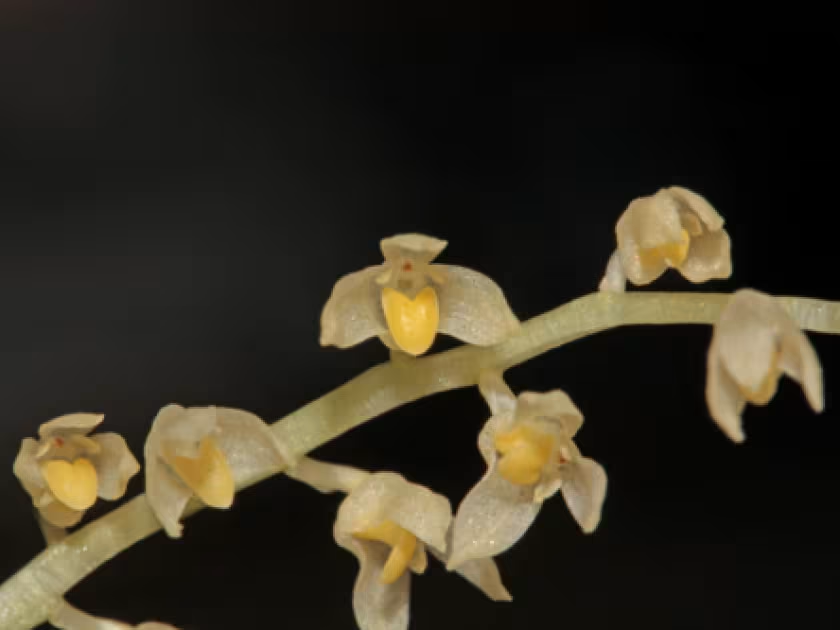
Description
Growing requirements
Bulbophyllum apodum is a distinguished member of the Orchidaceae family, native to the tropical forests of Southeast Asia. This species is an epiphytic orchid, meaning it naturally grows on the surface of trees rather than in soil.
Successful cultivation requires maintaining high ambient humidity, ideally between 70% and 80%. In domestic environments, this is best achieved through the use of a greenhouse, orchidarium, or frequent misting of the surrounding environment.
The optimal temperature range for growth is between 20°C and 28°C. It is essential to avoid significant temperature drops, as this plant is strictly tropical and does not possess mechanisms for enduring cool climate conditions.
The potting medium must be porous and well-draining, typically consisting of orchid-grade bark, charcoal, and perlite. This mixture allows for the quick evaporation of excess water, which is critical to prevent root rot in this sensitive species.
Bright, indirect light is necessary for healthy photosynthesis and flower production. Positioning the plant in a location with filtered light ensures the foliage maintains its deep green color and the plant remains vigorous throughout the growing season.
Main diseases and pests
Common pests that target Bulbophyllum apodum include spider mites, mealybugs, and aphids. These insects thrive in environments with poor air circulation and low humidity.
Fungal infections, often manifesting as black spots on leaves or pseudobulbs, are typically caused by overwatering or stagnant water in the crown. Proper ventilation and sterile tools are the primary methods for preventing these threats.