
Bulbophyllum barbigerum
Bulbophyllum barbigerum
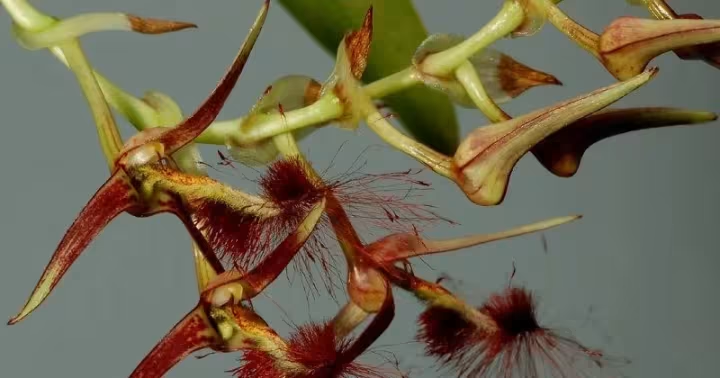
Description
Growing requirements
Bulbophyllum barbigerum is an epiphytic species belonging to the Orchidaceae family. It is native to the tropical forests of West Africa, where it thrives by attaching itself to tree trunks and branches in humid canopy environments.
The plant requires high humidity levels consistently, ideally between 70% and 80%. Maintaining this environment is critical for the development of its pseudobulbs and preventing the desiccation of its root system.
Temperature management is essential for this species; it prefers a stable range of 20 to 26 degrees Celsius. Avoiding sudden temperature drops and cold drafts is necessary to prevent stress and stunted growth in the culture.
For optimal growth, the substrate must be highly breathable and fast-draining. A typical cultivation mix includes orchid bark, charcoal, and sphagnum moss to provide the necessary structure while allowing roots to access air.
Watering should be balanced, ensuring the medium remains moist but never waterlogged. Using reverse osmosis or distilled water is highly recommended to prevent mineral buildup and salt toxicity, which the plant is sensitive to.
Main diseases and pests
Fungal infections and root rot are the most common threats to Bulbophyllum barbigerum, often triggered by poor ventilation and stagnant water accumulating in the root zone.
Pests such as spider mites, aphids, and scale insects can easily infest the plant if humidity levels are neglected or the plant becomes weakened by poor cultivation practices.
Cultural control is the first line of defense, involving regular inspection of the leaves and pseudobulbs for signs of infestation or necrosis, along with consistent air circulation.
Chemical treatments, such as systemic insecticides, should be used with caution, following specific product guidelines to ensure they are safe for sensitive orchid species.
Effective pest management relies on maintaining the plant's health through precise nutrient delivery and correct irrigation, preventing the opportunistic attacks of typical greenhouse pests.