
Bulbophyllum colubrinum
Bulbophyllum colubrinum
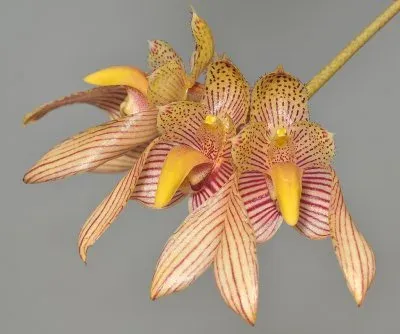
Description
Growing requirements
Bulbophyllum colubrinum is a specialized epiphytic orchid species belonging to the Orchidaceae family. Native to the humid rainforests of Southeast Asia, it is highly valued by collectors for its intricate growth patterns and unique floral morphology.
Optimal cultivation requires a warm and humid environment, mimicking its natural habitat. The temperature should ideally stay between 22°C and 27°C, with significant air circulation to prevent stagnant moisture, which can be detrimental to the plant.
The substrate must be highly porous to ensure rapid drainage. Using a mix of coarse orchid bark, perlite, and charcoal is recommended. Many growers prefer mounting the plant on tree fern or cork slabs to better replicate its epiphytic nature.
Light intensity should be moderate, typically between 12,000 and 18,000 lux. Intense direct sunlight must be strictly avoided as it causes leaf dehydration and severe burning, leading to reduced photosynthetic efficiency.
Watering frequency depends on the evaporation rate and humidity levels. During the active growth phase, keep the media moist but avoid waterlogging. During the resting phase, reduce watering to prevent rot while maintaining ambient humidity.
Main diseases and pests
Common pests include spider mites and mealybugs, which thrive in low-ventilation environments. Regular inspection of the undersides of leaves and pseudobulbs is necessary to catch and treat infestations early.
Fungal pathogens such as Fusarium or Pythium are significant threats. They often attack the roots if the substrate breaks down and stays saturated for too long, leading to a collapse of the root system and subsequent plant decline.
Leaf spot diseases are typically caused by water droplets left on the foliage in cool, stagnant conditions. Proper hygiene, such as avoiding overhead watering in the evenings, is a primary preventive measure against such infections.
Nutrient deficiency may occur if the plant remains in the same substrate for too long, as nutrients leach out and the pH level shifts. Periodic flushing with clean, low-mineral water is recommended to maintain a healthy root zone.
Viruses, such as Cymbidium Mosaic Virus, represent a critical, untreatable threat. Strict sterilization of all cutting tools between plants is the only effective way to prevent the spread of systemic viral diseases in a collection.