
Bulbophyllum phalaenopsis
Bulbophyllum phalaenopsis
Description
Growing requirements
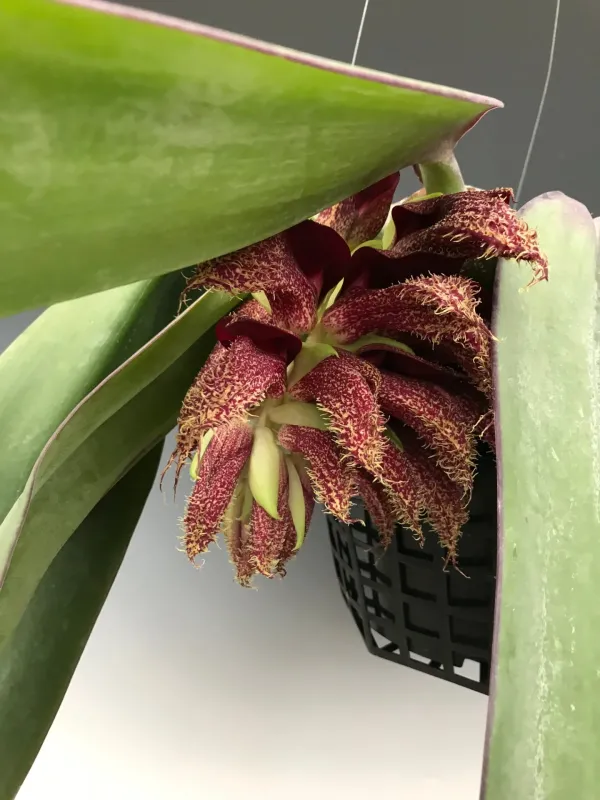
Bulbophyllum phalaenopsis is a remarkable epiphytic orchid species belonging to the Orchidaceae family, native to the tropical rainforests of New Guinea. It is highly valued for its large, leathery leaves and unique inflorescences that mimic the appearance of a Phalaenopsis orchid.
Optimal growth requires high ambient humidity, ideally between 70% and 90%, and consistent temperatures ranging from 22°C to 28°C. These conditions simulate the humid tropical forest floor where the plant naturally thrives on the trunks and branches of trees.
The cultivation medium must be highly porous to ensure efficient drainage and aeration, as the roots are prone to suffocation. A mixture of large-grade fir bark, charcoal, and sphagnum moss is recommended to maintain the right balance of moisture and air circulation.
Bright, filtered light is essential for the healthy development of this species. Direct sun must be avoided to prevent leaf scorching, while insufficient light levels will hinder the plant's ability to produce pseudobulbs and blooms.
Frequent watering is required to keep the medium slightly moist but never waterlogged. Using high-quality, mineral-free water is crucial, as the roots are sensitive to salt buildup, which can cause severe dehydration and root tip die-back.
Main diseases and pests
Spider mites are the most common pests affecting Bulbophyllum phalaenopsis, especially when the plant is kept in environments with poor air circulation. Regular inspection of the foliage is necessary to detect early signs of infestation.
Root and crown rot are frequent issues triggered by overwatering or the use of decomposed potting substrate. If the substrate loses its structure and becomes compacted, the roots lack the oxygen necessary to survive, leading to rapid decay.
Fungal leaf spots can occur when water is allowed to pool in the leaf axils for extended periods. To prevent this, ensure that the plant is placed in a location with steady, light air movement to facilitate drying after watering.
Scale insects can occasionally infest the stems and leaves, extracting plant sap and weakening the orchid. These should be manually removed or treated with appropriate horticultural oils as soon as they are spotted to prevent spreading.
Proper sanitation in the growing area, including regular cleaning of pots and benches, is a critical preventive measure against both pests and pathogens. Maintaining a clean environment significantly reduces the need for heavy chemical intervention.