
Bulbophyllum lilacinum
Bulbophyllum lilacinum
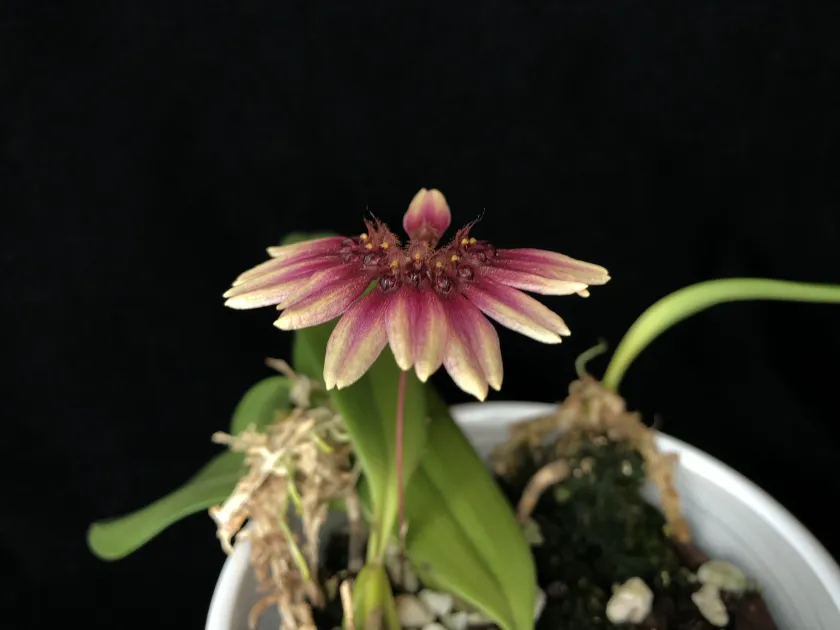
Description
Growing requirements
Bulbophyllum lilacinum is an epiphytic orchid species belonging to the Orchidaceae family, native to the lush tropical regions of Southeast Asia.
The plant features distinct pseudobulbs that serve as storage organs, allowing the orchid to thrive in its natural, periodically humid forest environment.
Successful cultivation requires a climate-controlled environment with high relative humidity, ideally between 70% and 80%, to mimic its natural habitat.
Regarding soil requirements, it does not grow in standard earth but requires a loose, breathable substrate like bark, charcoal, or fern root to maintain root health.
The lighting regime should be filtered and bright; direct exposure to intense noon sun is detrimental and will cause severe tissue damage to the leaves.
Main diseases and pests
The most significant threat to Bulbophyllum lilacinum is fungal decay, often triggered by excessive moisture and poor air circulation in the growing area.
Pests such as scale insects and spider mites frequently attack this species, especially if the air humidity drops below the necessary thresholds.
To mitigate these risks, growers should ensure steady airflow using small fans and monitor for early signs of infestation on the undersides of leaves.
Application of fungicides should be done with caution, choosing products specifically formulated for delicate orchid tissues to avoid chemical burn.
Maintaining a clean growing space and removing debris from around the plant is a critical preventive measure against the spread of pests and diseases.