
Bulbophyllum ambrosia
Bulbophyllum ambrosia
Description
Growing requirements
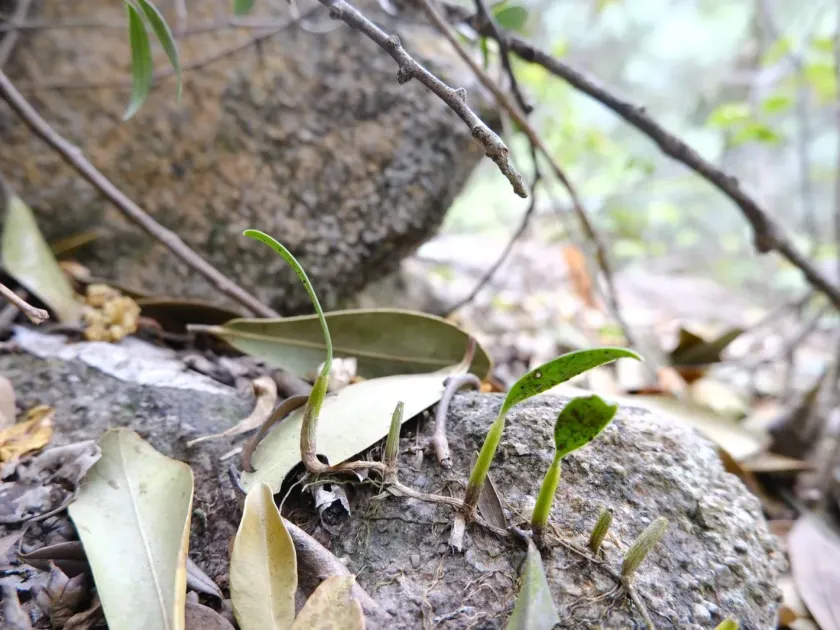
Bulbophyllum ambrosia is a fascinating species belonging to the Orchidaceae family. Naturally occurring as an epiphyte in the regions of Southern China and Southeast Asia, this orchid is prized for its unique growth habit and delicate, fragrant flowers that emit a scent reminiscent of honey or almonds.
To successfully cultivate this species, it is essential to replicate its natural environment. High ambient humidity, ranging between 60% and 80%, is vital. Growers should use humidifiers or pebble trays to maintain these levels, especially during the active growing season.
The plant requires bright but filtered light. Exposure to intense, direct sunlight can cause the leaves to scorch, leading to dehydration and stress. A spot near a window with sheer curtains or a light shade cloth provides the optimal luminosity for photosynthesis and flower development.
Potting media must be well-draining to prevent root suffocation. A mix consisting primarily of fine-grade fir bark, charcoal, and perlite is ideal. Because it is an epiphyte, the roots need significant airflow, and over-potting should be strictly avoided to prevent substrate water-logging.
Temperature control plays a critical role in its life cycle. Maintaining a moderate temperature range of 18°C to 25°C is recommended. A drop in night temperatures is often required to trigger the blooming process, mimicking the natural shifts found in its native mountain habitats.
Main diseases and pests
Improper watering is the primary cause of health issues in Bulbophyllum ambrosia. Over-watering in cool conditions frequently leads to root rot and pseudobulb decay. It is crucial to ensure the media dries slightly between waterings to maintain a healthy root system.
Pests such as spider mites and scale insects are common adversaries. Spider mites thrive in dry conditions and can quickly drain the plant of nutrients. Regular misting and proper humidity levels act as a natural deterrent, though horticultural soaps may be needed for outbreaks.
Mealybugs can often be found hiding in the crevices of the pseudobulbs or beneath the leaf bases. Because they are protected by a waxy coating, manual removal using cotton swabs dipped in isopropyl alcohol is often the most effective way to eliminate minor infestations.
Bacterial spots, appearing as dark, sunken lesions on the leaves, are a sign of poor ventilation and excessive moisture accumulation. Affected foliage should be carefully excised using a sterile knife, and the plant should be treated with appropriate fungicide sprays.
Regular maintenance, including the removal of old, dead pseudobulbs and repotting every two years, helps minimize the risk of pests and diseases. Providing fresh air circulation is the single most important factor in keeping this orchid species healthy and vigorous throughout the year.