
Brassia
Brassia
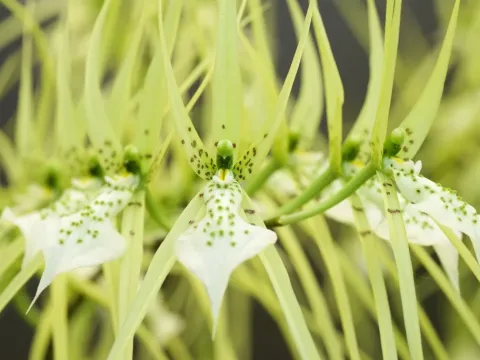
Brassia is a genus of epiphytic plants belonging to the Orchidaceae family. Naturally distributed throughout tropical regions of Central and South America, these orchids have adapted to humid forest habitats.
What the section contains
 Brassia
 hybrids
Brassia
Brassia hybrids
 Brassia angustilabia
Brassia angustilabia
Brassia angustilabia
 Brassia bidens
Brassia bidens
Brassia bidens
 Brassia caudata
Brassia caudata
Brassia caudata
 Brassia gireoudiana
Brassia gireoudiana
Brassia gireoudiana
 Brassia lanceana
Brassia lanceana
Brassia lanceana
 Brassia maculata
Brassia maculata
Brassia maculata
 Brassia verrucosa
Brassia verrucosa
Brassia verrucosa
 Orange Brassia
Brassia aurantiaca
Orange Brassia
Brassia aurantiaca
Brassia
Botanically, these orchids are sympodial, growing from a rhizome that produces a series of pseudobulbs. The foliage is typically light green and strap-like, while the flowers are distinctively shaped with elongated sepals and petals, often referred to as the "spider orchid".
Cultivation requires bright, indirect light levels, as direct sun will scorch the leaves. Proper air circulation is critical to mimic their natural environment and to prevent the buildup of stagnant air around the pseudobulbs.
The potting medium must be highly porous. A mixture of orchid bark, perlite, and sphagnum moss is ideal to ensure drainage. The roots require consistent moisture but must never be allowed to sit in standing water.
Optimal growth temperatures range from 20°C to 25°C during the day. A slight temperature drop at night is beneficial for inducing flowering and maintaining the plant's metabolic health throughout the year.
The primary pests affecting Brassia include scale insects and spider mites. These pests hide under leaf axils and on the underside of leaves, requiring regular inspection and timely treatment.
Common diseases involve root rot and fungal spotting, typically caused by poor drainage or excessive humidity without proper airflow. Proactive management involves ensuring the potting mix dries out partially between waterings.