
Bulbophyllum rothschildianum
Bulbophyllum rothschildianum
Description
Growing requirements
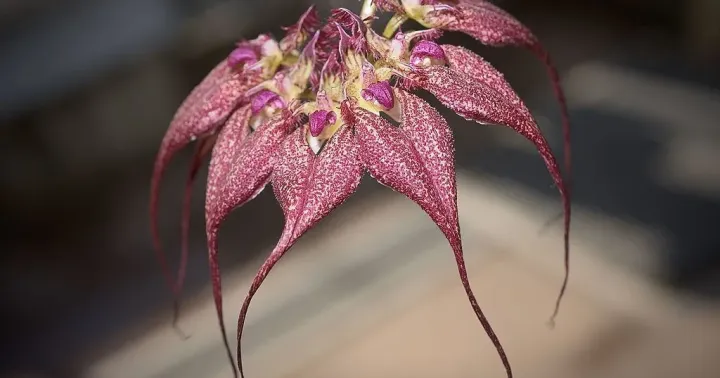
Bulbophyllum rothschildianum is a highly prized epiphytic orchid belonging to the Orchidaceae family. It is native to the cloud forests of India and Myanmar, where it grows in cool to warm conditions with constant air movement. It is known for its spectacular, large, spider-like flowers that emerge from the base of its pseudobulbs.
The cultivation of this species requires a specific climate control setup. It thrives in high humidity, ideally between 70% and 80%, to mimic its natural environment. Growers must ensure that the humidity is balanced with excellent airflow to prevent stagnant pockets of air that encourage fungal pathogens.
Temperature requirements for this plant are moderate. It prefers daytime temperatures between 20°C and 25°C, with a noticeable drop of about 5–8 degrees at night. This diurnal temperature variation is essential for the plant's metabolic processes and successful seasonal flowering.
The potting medium should be exceptionally well-draining, as the roots are sensitive to waterlogging. A mixture of pine bark, charcoal, and perlite is commonly used. Many growers prefer mounting the plant on cedar planks or tree fern slabs to simulate its natural growth habit on tree branches.
Light levels must be kept bright but diffused. Direct sunlight, especially during the middle of the day, can cause severe leaf burn. Providing filtered light through greenhouse shading or sheer curtains ensures that the plant generates enough energy for growth without damaging its photosynthetic tissues.
Main diseases and pests
Root rot, primarily caused by *Phytophthora* or *Pythium* species, remains the most significant threat to the health of Bulbophyllum rothschildianum. Over-watering and poor drainage exacerbate these conditions, leading to the rapid decay of the root system and eventual death of the plant.
Spider mites are a common pest problem, particularly in indoor environments with low humidity. They thrive on the underside of leaves, causing discoloration and eventual drop. Regular misting and proper humidity control act as effective preventive measures against mite outbreaks.
Scale insects and mealybugs can attach themselves to the pseudobulbs and leaves, feeding on plant fluids. Because these pests are well-hidden, they are often discovered only when damage has already occurred. Manual removal with alcohol-soaked cotton swabs or systemic insecticides are standard treatments.
Fungal leaf spot diseases may appear during periods of high humidity and cool nights if air circulation is insufficient. Ensuring that the foliage dries out quickly after watering or environmental humidity spikes is critical to preventing the spread of these fungal infections.
Bacterial soft rot is another dangerous condition, often characterized by a foul-smelling, mushy decay of the plant tissue. Affected areas must be cut back to healthy tissue using sterilized tools, and the plant should be kept dry for several days to allow the wound to callus over properly.