
Bulbophyllum pygmaeum
Bulbophyllum pygmaeum
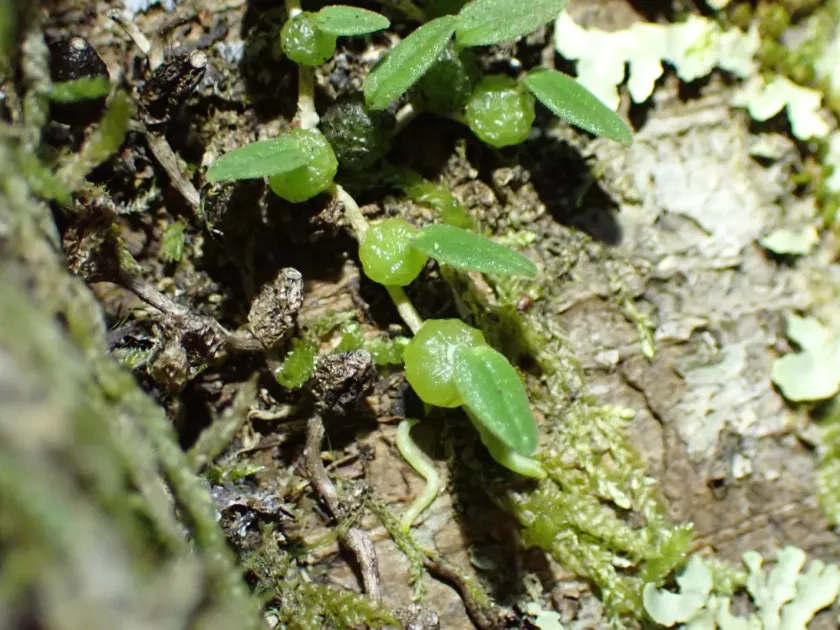
Description
Growing requirements
Bulbophyllum pygmaeum is a fascinating miniature epiphytic orchid belonging to the Orchidaceae family. It is native to New Zealand, where it colonizes tree trunks and rock faces in humid forest habitats.
This species requires high ambient humidity levels, ideally maintained between 60% and 80%. Consistent moisture is vital for the health of its small, delicate pseudobulbs and foliage.
Temperature requirements are moderate, with the plant thriving best in temperatures between 15°C and 22°C. It is intolerant of extreme heat or sudden, prolonged exposure to freezing conditions.
Regarding substrate, Bulbophyllum pygmaeum performs best when mounted on wood blocks or placed in shallow baskets filled with fine-grade bark, charcoal, and sphagnum moss.
Proper airflow is essential for this culture; stagnant conditions often lead to rapid decline. Regular misting or automated fogging systems are recommended to meet its hydration needs without overwatering.
Main diseases and pests
The primary threats to this orchid include fungal and bacterial pathogens that flourish in environments with poor air circulation and excessive moisture retention.
Spider mites are the most common pest, especially in indoor environments where humidity levels fluctuate significantly during winter months.
Scale insects and mealybugs may also infest the plant, hiding in the junctions of the pseudobulbs. Early detection and manual removal are critical management strategies.
Root rot, caused by degraded substrate or high salinity in the irrigation water, remains a common issue that limits the overall vigor of the plant collection.
Maintaining a clean growing space and employing preventive treatments with horticultural oils or fungicides can effectively mitigate these common health risks.