
Bulbophyllum cheiri
Bulbophyllum cheiri
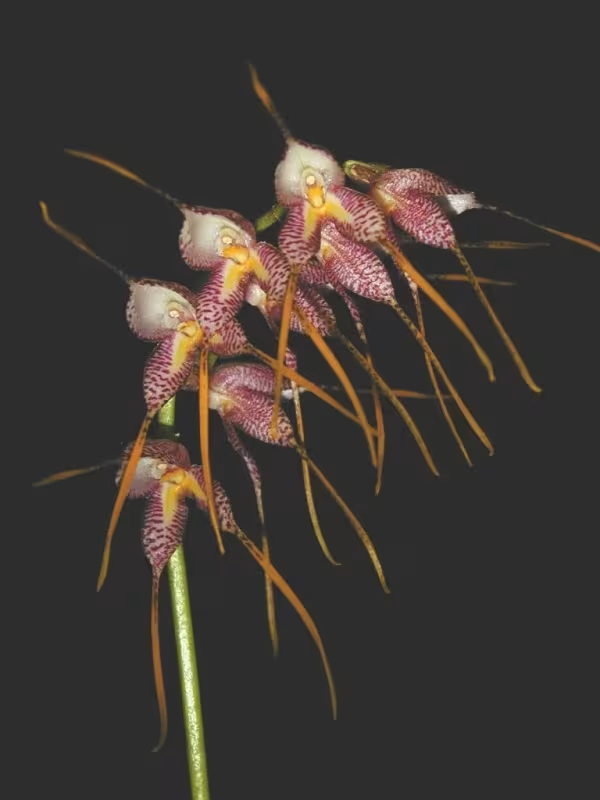
Description
Growing requirements
Bulbophyllum cheiri is an epiphytic orchid belonging to the Orchidaceae family. It is native to the tropical rainforests of Southeast Asia, thriving in environments with high humidity and consistent warmth.
The plant requires a stable tropical climate with temperatures ideally ranging between 22 and 28 degrees Celsius. Providing a consistent thermal environment is essential for the vegetative growth of the pseudobulbs.
Lighting should be bright but diffused, simulating the conditions of a forest canopy. Direct sunlight should be avoided to prevent thermal damage to the leaves, which can lead to necrotic spots.
A well-draining substrate is mandatory for this species. A mixture of pine bark, charcoal, and perlite or sphagnum moss provides the necessary aeration and moisture retention for healthy root development.
Regular misting or an automated irrigation system is necessary to maintain the high atmospheric humidity required for this orchid to flourish outside its native habitat.
Main diseases and pests
The most significant threat to Bulbophyllum cheiri is root rot caused by stagnant water in the pot. It is imperative that the substrate dries out slightly between watering cycles.
Pests such as spider mites and scale insects are common in indoor greenhouse conditions. They thrive in dry air, which is why maintaining appropriate humidity levels acts as a natural deterrent.
Fungal infections can spread rapidly in crowded environments. Ensuring adequate air circulation between plants is a crucial step in maintaining a healthy orchid collection.
Bacterial soft rot can occur if water remains in the growth center of the plant. Proper positioning, such as mounting the plant on a slant, can help prevent water accumulation.
Implementing a strict hygiene routine for tools and pots is recommended to prevent the transmission of pathogens between different specimens in the nursery.