
Bulbophyllum saltatorium
Bulbophyllum saltatorium
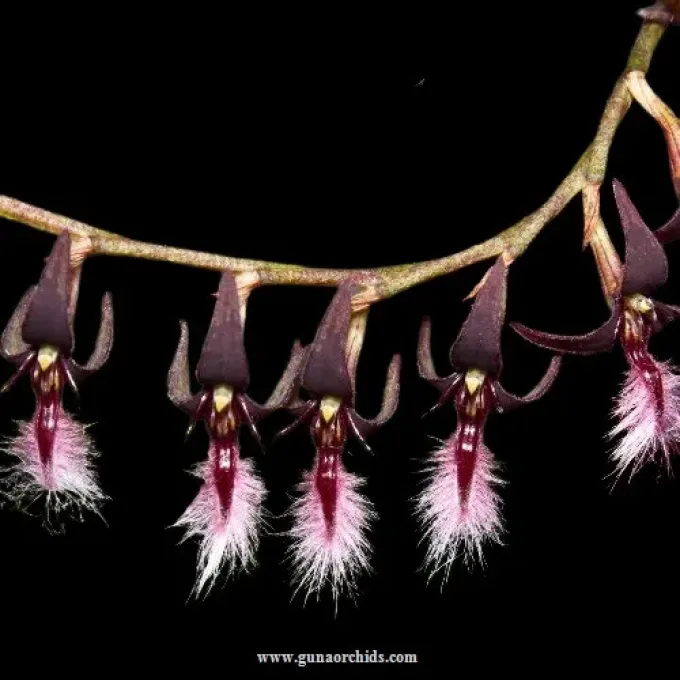
Description
Growing requirements
Bulbophyllum saltatorium is a member of the Orchidaceae family and is an epiphytic plant native to the tropical forests of West and Central Africa. In its natural environment, it grows on tree trunks and branches, which determines its specific ecological needs.
Successful cultivation requires maintaining a high humidity level, typically between 70-80%, and a stable temperature range of 20-25 degrees Celsius. The plant is highly sensitive to rapid temperature fluctuations and cold drafts, which can stunt growth.
A loose, well-draining substrate is essential for this species. A mixture of pine bark, sphagnum moss, and charcoal is recommended to ensure adequate aeration for the roots. Excess moisture in the pot must be avoided to prevent root rot.
The plant thrives under bright, filtered light. Exposure to direct sunlight should be avoided, as it can cause burns on the leaves. East or west-facing windows with appropriate shading during peak hours are ideal for its development.
Agrotechnical practices include regular fertilization during the active growing season using diluted orchid-specific fertilizers. During the winter months, watering and fertilization should be reduced significantly to allow the plant to enter a necessary resting phase.
Main diseases and pests
The primary threats to Bulbophyllum saltatorium are related to improper watering, which often leads to root and stem rot. If soft spots or discoloration are detected, affected parts must be removed and treated with a suitable fungicide.
Pests such as spider mites and mealybugs can become a significant issue, especially in dry environments. Preventive measures and the use of systemic insecticides are necessary if infestation signs appear on the foliage or stems.
Maintaining high hygiene standards in the growing area is crucial to prevent the spread of diseases. Ensuring proper airflow around the plant helps minimize the risk of bacterial and fungal infections that often occur in stagnant conditions.
If an infestation is discovered early, manual removal with an alcohol-soaked swab can be effective. However, for more severe cases, professional chemical treatment according to product guidelines is mandatory to ensure the plant's survival.
Systematic monitoring and observation are vital for the successful management of this exotic species, as its delicate nature requires precise attention to environmental conditions and pest exclusion.