
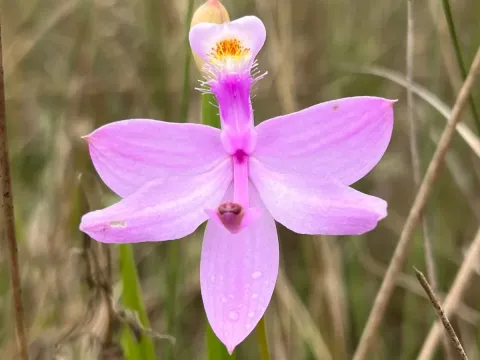
Calopogon
Calopogon
Calopogon (Calopogon) is a genus of perennial herbaceous plants belonging to the Orchid family (Orchidaceae). In the wild, these plants are found primarily in North America, preferring moist habitats such as bogs, wet meadows, and coastal forest margins.
What the section contains


Calopogon
Botanically, the plant is a tuberous species with narrow linear leaves and a characteristic erect flower spike. A defining feature of the genus is the unique structure of the flower, where the lip is positioned at the top, which is unconventional for most orchids.
For successful cultivation, Calopogon requires specific conditions: high substrate moisture and excellent light intensity. The soil should be acidic, rich in organic matter, yet well-aerated to prevent the root system from rotting during the active growing season.
In terms of economic use, Calopogon is not a mass-market agricultural crop but holds significant value in ornamental gardening and landscape design. It is highly prized for its vibrant, eye-catching inflorescences that can effectively enhance wet garden areas.
The agronomy of this plant requires strict adherence to temperature regimes and water quality. It is strongly advised against using hard water for irrigation, as it can alter the substrate pH and lead to plant decline. In regions with harsh winters, tubers must be protected from freezing.
The primary threats to Calopogon are fungal diseases that emerge due to waterlogging and poor air circulation. Excessive moisture combined with low temperatures frequently triggers root rot, which can be devastating to the tuberous root system.
Among the pests, aphids and spider mites are the most common threats that target young foliage and floral stems. Control measures involve the use of appropriate biological or chemical insecticides approved for use on ornamental crops.