
Bulbophyllum mastersianum
Bulbophyllum mastersianum
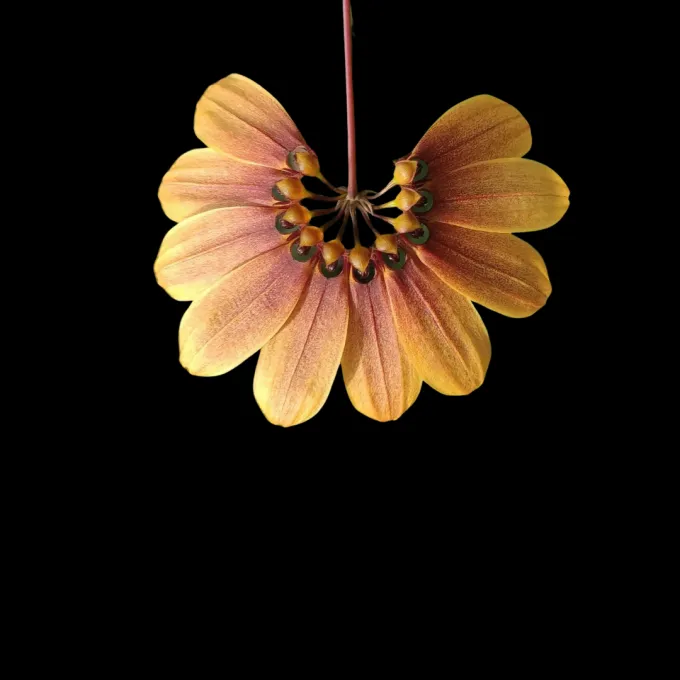
Description
Growing requirements
Bulbophyllum mastersianum is a fascinating species of epiphytic orchid belonging to the Orchidaceae family. It is native to the tropical regions of Southeast Asia, specifically found in the dense, humid rainforests of Indonesia, where it thrives on tree branches.
To successfully cultivate this species, it is essential to replicate its natural environment by providing high ambient humidity, ideally between 70% and 80%. Temperature stability is crucial, with preferred daytime ranges between 22°C and 26°C and slightly cooler nights.
The plant is characterized by its sympodial growth habit, featuring distinct, tightly packed pseudobulbs that store essential water and nutrients. The leaves are leathery and evergreen, providing a robust appearance that reflects the plant's adaptation to high-light, high-humidity canopy conditions.
The choice of substrate is a critical aspect of its agrotechnology. A coarse, well-draining mixture consisting primarily of pine bark, perlite, and a portion of sphagnum moss is recommended to ensure that the roots have constant access to fresh air while remaining hydrated.
Proper water management is vital for the health of Bulbophyllum mastersianum. The substrate should be allowed to dry slightly between waterings to prevent root suffocation, and the use of balanced, diluted orchid fertilizer during the growing season will significantly enhance overall vigor.
Main diseases and pests
The primary threats to this orchid include various fungal pathogens that flourish in stagnant, humid conditions with poor air movement. Overwatering is the most common cause of root and pseudobulb rot, often leading to rapid decline of the specimen.
Pest management is equally important, as spider mites and scale insects are known to infest the plant when environmental stress occurs. Regular inspection of the pseudobulbs and leaves is necessary to catch infestations early and apply appropriate chemical or mechanical controls.