
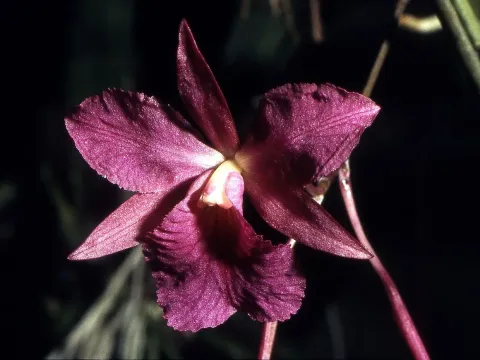
Broughtonia
Broughtonia
Broughtonia is a genus of epiphytic and lithophytic perennial plants belonging to the Orchidaceae family. Naturally occurring in the Caribbean, particularly Jamaica, these orchids have adapted to grow on tree branches or limestone rock faces.
What the section contains


Broughtonia
To cultivate Broughtonia successfully, high light intensity is required, mirroring their natural habitat. However, direct midday sun should be filtered to prevent leaf scorching, which can quickly damage the plant's delicate tissues.
The temperature range should remain warm during the active growing season, with daytime highs around 25°C to 28°C. A distinct temperature drop during the night is essential to trigger blooming and maintain overall health.
Watering requirements are specific: the plants prefer a wet-and-dry cycle where the medium dries out completely between waterings. The roots must be allowed to aerate; therefore, high-quality, coarse-grade pine bark is the standard growing medium.
Air circulation is perhaps the most critical factor for Broughtonia. Without constant fresh air movement around the roots and leaves, the plants become highly susceptible to stagnation and subsequent fungal decay.
Scale insects and mealybugs are the most prevalent pests affecting Broughtonia. They often cluster in tight spaces between the leaves and around the pseudobulbs, draining sap and causing stunted growth.
Spider mites are common in indoor settings during the winter when indoor heating lowers the ambient humidity. Regular monitoring of the leaf undersides is recommended to catch infestations before they spread.
Root rot, driven by overwatering or poor-quality, decomposing media, is the primary cause of mortality for this genus. Once root rot occurs, the plant's ability to hydrate through pseudobulbs is severely compromised.
Fungal leaf spotting can occur during periods of high humidity and poor ventilation. Keeping the foliage dry, especially at night, is a proven strategy for mitigating these risks.
Virus infections are difficult to diagnose and impossible to cure. Practicing strict sterilization of all cutting tools between plants is the most effective way to prevent the spread of systemic pathogens.