
Bulbophyllum ivorense
Bulbophyllum ivorense
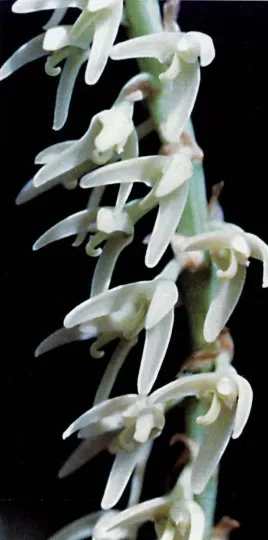
Description
Growing requirements
Bulbophyllum ivorense is an epiphytic orchid species belonging to the Orchidaceae family. It is native to the tropical rainforests of West Africa, where it thrives in high-humidity environments.
Successful cultivation of this species requires a stable environment that mimics its natural habitat. It prefers bright, filtered light and should never be exposed to harsh, direct sunlight that can damage its pseudobulbs.
Temperature management is crucial for the health of this plant. It requires warm conditions with daytime temperatures ranging between 22 and 28 degrees Celsius, while maintaining consistent humidity levels.
The planting medium must be well-draining and airy. Standard potting soil is unsuitable; instead, a mixture of pine bark, charcoal, and sphagnum moss is recommended to ensure proper root aeration.
Regular watering is necessary to prevent the plant from drying out, but excess water must drain away immediately. Misting the foliage during the morning hours helps maintain the required ambient humidity.
Main diseases and pests
Fungal infections, often caused by stagnant air and waterlogged substrate, are the primary health threat for Bulbophyllum ivorense in domestic environments.
Root rot is a common and severe issue that occurs if the watering schedule is too frequent or if the drainage system is inadequate for the plant's needs.
Pests such as spider mites, aphids, and scale insects can cause significant damage by feeding on the sap of the orchid's delicate pseudobulbs and leaves.
Early detection is key to pest management. Inspecting the plant weekly for visible signs of damage ensures that the infection does not spread to other specimens.
Good hygiene in the growing space, including regular cleaning of pots and proper spacing, significantly reduces the likelihood of pest outbreaks and disease development.