
Bulbophyllum tuberculatum
Bulbophyllum tuberculatum
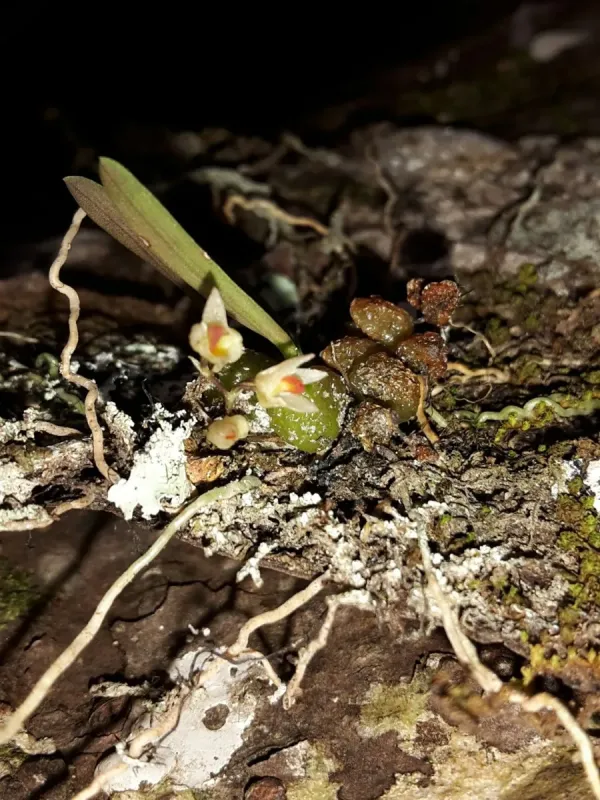
Description
Growing requirements
Bulbophyllum tuberculatum is a distinctive orchid species within the Orchidaceae family, native to the tropical forests of Mauritius. As an epiphyte, it naturally grows on the branches of canopy trees, adapting to high atmospheric humidity and filtered light conditions.
The botanical structure is characterized by clustered pseudobulbs that function as water-storage reservoirs. Its root system is highly specialized for absorbing moisture directly from the air and rain, necessitating a very specific approach to domestic cultivation.
To cultivate this species, one must replicate its natural environment by providing a mounting medium such as cork bark or tree fern fiber. Growing it in containers is generally discouraged, as the roots require significant aeration and must dry out periodically to prevent decay.
Climate requirements include a stable temperature range of 20°C to 26°C with moderate fluctuations. High humidity levels, ideally maintained between 70% and 85%, are crucial for healthy pseudobulb development and consistent leaf turgor.
Light levels should be bright but indirect; direct tropical sun can cause severe tissue necrosis. Growers often use 50-70% shade cloth or position the plant where it receives soft morning light while being protected during the intense afternoon hours.
Main diseases and pests
The primary threats to Bulbophyllum tuberculatum in captivity are pathogenic fungi, particularly those causing crown and root rot. These often result from poor air circulation or over-watering, especially in cooler conditions where evaporation is slowed.
Pests such as spider mites are a constant concern in controlled environments, as they thrive in the same warm, dry conditions that stress orchids. They pierce the leaf cells, leaving characteristic spotting and leading to a reduction in photosynthesis.
Scale insects and mealybugs represent a secondary pest threat, often found hidden under the sheaths of pseudobulbs. Early detection and treatment with horticultural oils or specific insecticides are essential to prevent infestation spread.
Bacterial soft rot can occur if water remains trapped in the new growth or leaf axils for extended periods. This disease progresses rapidly and often leads to the loss of entire stems if not treated surgically and kept dry.
The overall health of the specimen relies on preventative sanitation, including the regular cleaning of the growing environment and the prompt isolation of any plants showing signs of stress or unusual spotting on the foliage.