
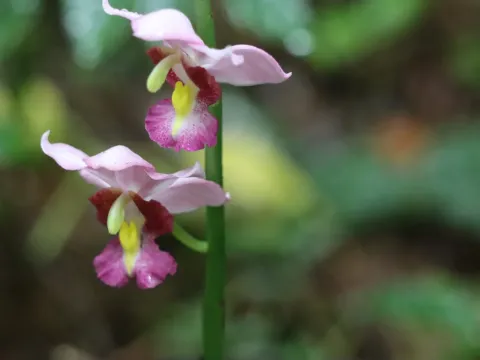
Calanthe
Calanthe R. Br.
Calanthe is a genus of perennial herbaceous plants belonging to the Orchidaceae family. These orchids are primarily native to tropical and subtropical regions of Asia, Australia, and the Pacific Islands, where they grow in diverse forest habitats.
What the section contains

Calanthe
Botanically, the genus is characterized by a sympodial growth habit, producing pseudobulbs that function as essential storage organs for water and nutrients. The foliage is typically plicate and wide, supporting the development of graceful, long-lasting racemes of flowers.
For successful cultivation, Calanthe requires bright, indirect light to avoid leaf scorching. The environmental needs vary by species, with some requiring a distinct cool and dry dormant period, while others need stable, warm temperatures throughout the entire year.
The substrate must provide optimal drainage while maintaining sufficient moisture. A balanced mix typically consists of pine bark, charcoal, perlite, and sphagnum moss to ensure that the delicate root systems are aerated and protected from waterlogging.
In terms of agricultural and horticultural use, Calanthe is highly valued in the decorative flower industry. These orchids are staples in professional greenhouse production and hobbyist collections due to their stunning floral displays and relative ease of propagation.
Common pests affecting Calanthe orchids include spider mites, mealybugs, and scale insects. These pests often thrive in environments with poor air circulation or improper humidity levels, leading to significant stress on the host plants.
Fungal and bacterial infections, such as root rot and leaf spotting, are frequent threats, especially under conditions of overwatering or stagnant moisture. Protecting the plant starts with maintaining a clean, well-draining environment to discourage pathogens.
Effective management includes regular inspection for signs of distress and prompt removal of infected or damaged plant tissue. Proper hygiene during propagation and maintenance is vital to preventing the spread of diseases across an orchid collection.
When chemical treatments are necessary, growers should prioritize selective insecticides and fungicides that are safe for orchid tissues. Careful application according to label instructions is required to manage pest outbreaks effectively without harming the plants.
Maintaining a steady balance of humidity and fresh air circulation is the best preventive strategy against both pests and disease. Growers should focus on creating an environment that mimics the plant's natural habitat for peak health and productivity.