

Reference · Pests
Noctuidae
Owlet moths (family Noctuidae, order Lepidoptera) are a vast group of nocturnal moths whose caterpillars are among the most destructive polyphagous pests in agriculture. Adults typically display dull, greyish or brownish coloration, which provides effective camouflage during daylight hours.
510
items
What the section contains
 Silver Y moths
Plusia
Silver Y moths
Plusia
 Simyra
Simyra
Simyra
 Simyra insularis
Simyra insularis
Simyra insularis
 Small Quaker
Orthosia cruda
Small Quaker
Orthosia cruda
 Smeared dagger moth
Acronicta oblinita
Smeared dagger moth
Acronicta oblinita
 Sorrel knot grass moth
Acronicta rumicis
Sorrel knot grass moth
Acronicta rumicis
 South American cotton bollworm
Helicoverpa gelotopoeon
South American cotton bollworm
Helicoverpa gelotopoeon
 Southern armyworm
Persectania ewingii
Southern armyworm
Persectania ewingii
 Southern armyworm
Spodoptera eridania
Southern armyworm
Spodoptera eridania
 Southern cotton worm
Spodoptera cosmioides
Southern cotton worm
Spodoptera cosmioides
 Soybean looper
Chrysodeixis subsidens
Soybean looper
Chrysodeixis subsidens
 Soybean looper
Chrysodeixis includens
Soybean looper
Chrysodeixis includens
 Soybean looper
Rachiplusia nu
Soybean looper
Rachiplusia nu
 Spaelotis
Spaelotis
Spaelotis
 Speckled green fruitworm
Orthosia hibisci
Speckled green fruitworm
Orthosia hibisci
 Spodoptera albula
Spodoptera albula
Spodoptera albula
 Spodoptera androgea
Spodoptera apertura
Spodoptera apertura
Spodoptera androgea
Spodoptera androgea
Spodoptera apertura
Spodoptera apertura
 Spodoptera armyworms
Spodoptera
Spodoptera armyworms
Spodoptera
 Spodoptera depravata
Spodoptera depravata
Spodoptera depravata
 Spodoptera ochrea
Spodoptera pecten
Spodoptera pecten
Spodoptera ochrea
Spodoptera ochrea
Spodoptera pecten
Spodoptera pecten
 Spodoptera pectinicornis
Spodoptera pectinicornis
Spodoptera pectinicornis
 Spodoptera pulchella
Spodoptera pulchella
Spodoptera pulchella
 Spotted clover moth
Heliothis scutosa
Spotted clover moth
Heliothis scutosa
 Stalk borer
Papaipema nebris
Stalk borer
Papaipema nebris
 Stalk borer
Papaipema
Stalk borer
Papaipema
 Straw moth
Oria musculosa
Straw moth
Oria musculosa
 Striped garden caterpillar
Trichordestra legitima
Striped garden caterpillar
Trichordestra legitima
 Sudan bollworm
Diparopsis castanea
Sudan bollworm
Diparopsis
Sudan bollworm
Diparopsis tephragramma
Sudan bollworm
Diparopsis watersi
Sudan bollworm
Diparopsis castanea
Sudan bollworm
Diparopsis
Sudan bollworm
Diparopsis tephragramma
Sudan bollworm
Diparopsis watersi
 Sugarcane stem borer
Acigona steniellus
Sugarcane stem borer
Acigona steniellus
 Suspected moth
Parastichtis suspecta
Suspected moth
Parastichtis suspecta
 Swiss Dart
Rhyacia helvetina
Swiss Dart
Rhyacia helvetina
 Sword-grass moth
Xylena exsoleta
Sword-grass moth
Xylena exsoleta
 Sycamore moth
Acronicta aceris
Sycamore moth
Acronicta aceris
 Syngrapha
Syngrapha
Syngrapha
 Syngrapha epigaea
Syngrapha epigaea
Syngrapha epigaea
 Tawny Marbled Minor
Oligia latruncula
Tawny Marbled Minor
Oligia latruncula
 The Herald
Scoliopteryx libatrix
The Herald
Scoliopteryx libatrix
 Tholera
Tholera
Tholera
 Thysanoplusia
Thysanoplusia
Thysanoplusia
 Thysanoplusia intermixta
Thysanoplusia intermixta
Thysanoplusia intermixta
 Tiliacea aurago
Tiliacea aurago
Tiliacea aurago
 Tiliacea citrago
Tiliacea citrago
Tiliacea citrago
 Tiracola
Tiracola
Tiracola
 Tiracola plagiata
Tiracola plagiata
Tiracola plagiata
 Titicaca moth
Helicoverpa titicacae
Titicaca moth
Helicoverpa titicacae
 Tobacco budworm
Chloridea virescens
Tobacco budworm
Chloridea virescens
 Tokyo cutworm
Agrotis tokionis
Tokyo cutworm
Agrotis tokionis
 Tokyo moth
Trachea tokiensis
Tomato fruit borer
Sacadodes pyralis
Tokyo moth
Trachea tokiensis
Tomato fruit borer
Sacadodes pyralis
 Tomato moth
Lacanobia oleracea
Tomato moth
Lacanobia oleracea
 Tomato moth
Melanchra persicariae
Tomato moth
Melanchra persicariae
 Tomato moth
Melanchra
Tomato moth
Melanchra
 Trachea anguliplaga
Trachea anguliplaga
Trachea anguliplaga
 Trichordestra
Tropical armyworm
Spodoptera litura
Trichordestra
Trichordestra
Tropical armyworm
Spodoptera litura
Marketplace
Products in this section · 12



Noctuidae
The caterpillars of these moths go through several developmental stages (usually six instars). They are characterized by a robust body, often smooth or with sparse hairs, and possess a specific pattern of stripes or spots. When disturbed or at rest, they characteristically curl into a tight ring.
The life cycle of most species consists of four stages: egg, larva, pupa, and adult (imago). Overwintering most commonly occurs in the soil as a pupa or a late-instar larva, which ensures a high survival rate during harsh winter conditions.
Well-known members of this group include the turnip moth, cabbage moth, silver Y moth, and bollworm. A common trait across the family is the high fecundity of females, which can lay hundreds of eggs on the underside of leaves or in the topsoil.
Taxonomy within the family relies on wing venation in adults and the structure of larval mouthparts, which is essential for accurate species identification in a laboratory setting.
Owlet moths are polyphagous pests that cause damage to a wide variety of agricultural crops, including cereals, corn, sugar beets, sunflowers, vegetables, and ornamental plants.
The nature of the damage depends on the specific species. Cutworms lead a hidden life, severing plant stems at the soil surface, which leads to thinning of crops and the death of young seedlings.
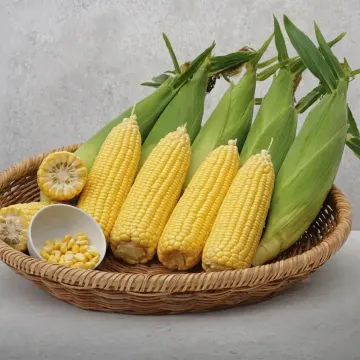
Leaf-eating species consume leaf tissue, often leaving only the coarse veins behind, which severely reduces the photosynthetic surface and slows plant growth. Some species bore into fruits, such as tomatoes or corn ears.
Caterpillar infestations can result in massive economic losses, as their rapid proliferation can destroy 50–80% of a crop in a short time if left unmanaged.
Furthermore, the wounds caused by feeding caterpillars serve as entry points for secondary infections, such as fungal or bacterial pathogens, which can exacerbate the damage to the plant.
The flight period for most owlet moth species begins in May and continues through late summer. Activity is heavily influenced by weather conditions, with warm and moderately humid weather promoting higher reproduction rates.
The highest damage levels occur during seedling emergence in spring and during the fruit or ear development phases in summer. Pheromone traps are essential tools for agronomists to track the start of moth flights.
Generational development is closely tied to the phenological stages of the host plants. Under favorable conditions, many species can complete two or three generations per season, complicating integrated pest management.
In autumn, caterpillars migrate deeper into the soil for pupation and diapause, making them difficult to target with traditional control methods during that time.
Monitoring population density during critical crop growth stages is the most important factor in deciding when to initiate protection measures.
The first sign of owlet moth activity is often the presence of "windows" or holes in leaves. Inspection of the undersides of leaves may reveal clusters of eggs laid by the females.
The presence of cutworms is indicated by sudden wilting and falling of individual plants in the field. If the soil around a wilted plant is gently excavated, the characteristic curled-up larva can be found.
Accumulation of larval frass (excrement) on the leaves or the soil surface beneath the plants is another key diagnostic sign. These appear as small, dark, granular pellets.
For crops like corn or tomatoes, signs of infestation include boreholes in ears or fruit filled with excrement, often associated with the development of soft rots.
Using light traps or pheromone monitors at night allows for the early detection of large moth influxes, providing a window to prepare for caterpillar control.
An effective protection strategy against owlet moths must be integrated, involving agrotechnical, biological, and chemical methods to influence the pest population.
Agrotechnical measures include deep autumn plowing to bring pupae to the surface, where they become vulnerable to cold or predators, as well as systematic weed management to remove potential host reservoirs.
Biological control involves the use of natural enemies, such as Trichogramma wasps, which parasitize the moth eggs, significantly reducing population levels without the need for chemical pesticides.
Chemical control is justified when the economic injury threshold is reached. Insecticides with contact, stomach, or systemic action are used, ideally targeting young-instar larvae for maximum efficacy.
- Crop rotation practices.
- Spatial isolation of planting fields.
- Use of biological pesticides based on Bacillusthuringiensis.
- Timely application of authorized insecticides.