
Small Quaker
Orthosia cruda
Description
How to identify
The Small Quaker (Orthosia cruda) is a moth belonging to the family Noctuidae. It is widely recognized in Europe and parts of Asia as a significant spring pest for various deciduous trees and orchards.
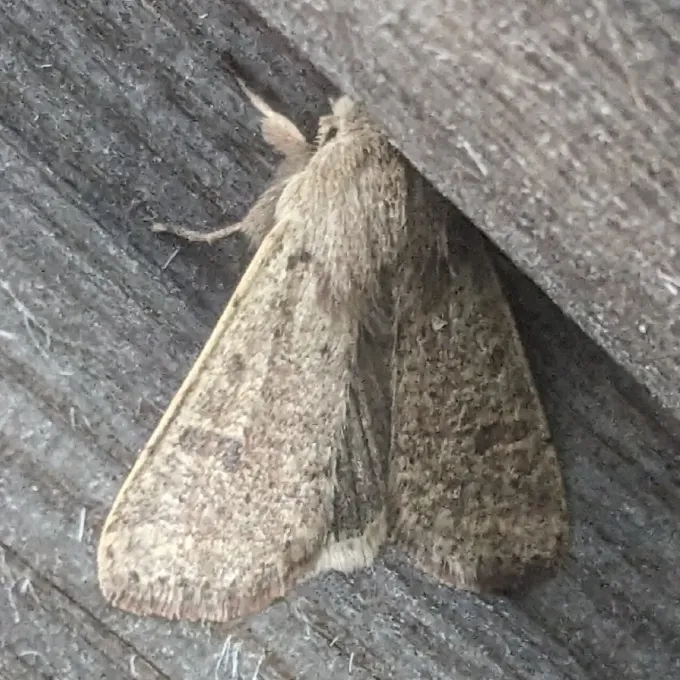
The adult moth has a wingspan of approximately 30–35 mm. The forewings are typically greyish-brown to reddish-brown, decorated with distinct dark spots, providing excellent camouflage against tree bark.
Larvae, or caterpillars, are green with longitudinal light-colored stripes, which allows them to blend in perfectly with young leaves and buds. This makes them difficult to detect until substantial damage has occurred.
The life cycle consists of one generation per year. The insect overwinters as a pupa, protected by a cocoon in the soil beneath the host plant, waiting for the arrival of spring temperatures.
Females lay eggs in small clusters on twigs and buds. The high reproductive rate of this species can lead to rapid infestations if spring conditions are favorable for larval development.
What it damages
The primary damage is caused by larvae feeding on developing buds in early spring. They hollow out the buds, often destroying them completely, which leads to immediate loss of potential fruit yield.
Small Quaker larvae are polyphagous, attacking a wide range of fruit trees including apple, pear, plum, and cherry. They can also damage forest trees like oaks, posing a risk to biodiversity.
After consuming buds, the larvae move on to feed on young leaves and blossoms. This heavy feeding can result in severe defoliation, which severely hampers the tree's ability to undergo photosynthesis.
Affected trees often show reduced vigor and stunted growth. The wounds created by larval feeding provide entry points for secondary pathogens and fungal diseases, further damaging the host plant.
- Destruction of flower and leaf buds.
- Defoliation of young shoots and foliage.
- Increased susceptibility to tree diseases.
- Stunted annual growth of twigs.
- Significant reduction in fruit production.
When it appears
Adult moths are among the first to emerge in early spring, typically between March and May. They are strictly nocturnal, which makes them difficult to spot without specialized light traps.
Egg hatching is synchronized with the swelling of buds on host trees. This ensures that the newly emerged larvae have immediate access to high-quality nutrition as soon as they hatch.
The larval stage is active throughout April and May. During this time, they feed intensively and grow rapidly before reaching their final instar stage.
In early summer, mature larvae descend to the soil and form pupae within cocoons. The pupal stage lasts throughout the rest of the summer, autumn, and winter, entering a state of diapause.
Monitoring the flight of adults using pheromone or light traps in early spring is essential for timing pest management interventions correctly before larvae begin feeding.
Signs of infestation
The first signs of infestation are damaged or hollowed-out buds that fail to blossom normally. Close inspection often reveals frass (excrement) around these damaged areas.
The presence of fine webbing on young shoots is another indicator that larvae are present, as they use this silk to move and secure themselves while feeding on tender parts of the plant.
Rolled or skeletonized leaves in the spring are classic signs of feeding activity. As the larvae grow, their consumption rate increases significantly, making the damage more visible.
Large numbers of fallen, damaged buds and blossoms beneath the tree canopy are a clear sign of a significant infestation level that requires immediate management action.
In the evening, one can occasionally spot the larvae on the leaves, as they become active at night. Their green color is the best defense against visual detection during the day.
Control measures
Cultural practices, such as tilling the soil beneath tree canopies in autumn or early spring, can help disturb or destroy the pupae overwintering in the ground.
Biological control using microbial insecticides, specifically those based on Bacillus thuringiensis, is highly effective against larvae while being safe for pollinators and other beneficial insects.
Chemical control with systemic insecticides may be necessary in orchards with a history of high pest pressure. Applications should be timed to match the bud-burst stage for maximum effectiveness.
Pheromone trapping is a valuable tool for tracking the population levels of adults and determining the precise timing for protective measures, reducing unnecessary pesticide use.
Maintaining healthy trees through proper pruning and balanced nutrition creates a resilient orchard environment, making it harder for Orthosia cruda to cause significant economic damage.
Taxonomy
- Latin name
- Orthosia cruda
- Order
- Lepidoptera (butterflies)
- Family
- Noctuidae
- EPPO code
- ORTOCR
Discussion
No discussions yet — be the first.