
Southern cotton worm
Spodoptera cosmioides
Description
How to identify
The Southern cotton worm (Spodoptera cosmioides) is a moth species belonging to the family Noctuidae. The adult moths are nocturnal, featuring dark, mottled wings that provide excellent camouflage against plant surfaces and soil.
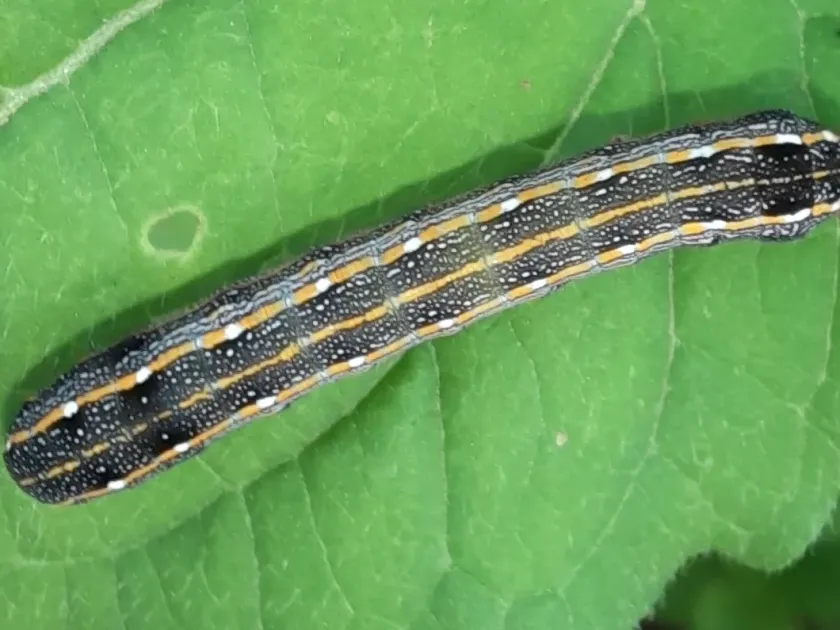
The larvae, or caterpillars, undergo several growth stages (instars). As they mature, their coloration shifts from lighter hues to dark, almost black, often featuring distinct pale longitudinal stripes, which aids in their survival across varied environments.
Females deposit eggs in masses on the undersides of leaves, covering them with specialized scales from their abdomen. This serves as a protective layer against environmental factors and potential predators, ensuring higher survival rates for the offspring.
This species is highly mobile, with adults capable of migrating long distances to colonize new fields. This rapid dispersal makes the Southern cotton worm a challenging pest to manage on a regional agricultural scale.
Identification is primarily based on larval morphology and the characteristic patterns of damage left on host plants. Field scouting is essential to distinguish this species from other related Spodoptera moths that may inhabit the same crops.
What it damages
As a polyphagous insect, the Southern cotton worm feeds on a wide range of crops. It is particularly notorious for damaging cotton, soybeans, corn, sunflowers, tomatoes, and various legumes, causing significant economic losses.
Young larvae initially graze on the leaf surface, causing window-paning, while older larvae consume the entire leaf lamina. When they reach their final growth stages, they can cause massive defoliation, severely inhibiting the plant's photosynthetic capacity.
Beyond foliar damage, the larvae often burrow into the reproductive structures of the plant, such as fruit, buds, and flowers. This directly impacts yield, as it causes fruit drop or renders the produce unmarketable due to entry holes and rot.
In infested fields, the accumulated larval frass (excrement) can promote the growth of secondary pathogens, leading to bacterial or fungal infections that further degrade the plant tissues and reduce the overall quality of the harvest.
Persistent infestations lead to weakened plant health, making crops more susceptible to environmental stress and other diseases, ultimately resulting in a significant decrease in both quantity and quality of the final product.
When it appears
The life cycle of the Southern cotton worm is heavily influenced by temperature and moisture levels. Warm conditions accelerate development, allowing the species to complete multiple generations within a single growing season.
Overwintering typically occurs in the pupal stage, with pupae buried several centimeters deep in the soil. This allows the population to survive cooler periods and emerge once the soil temperatures become conducive to development.
Peak pest pressure generally occurs in mid-to-late summer, coinciding with the reproductive stages of host crops. During this time, the overlapping of generations often makes management more complex as larvae of different ages are present.
The moth's nocturnal activity increases during warm nights, facilitating mating and oviposition. Prolonged warm autumns can lead to additional generations, increasing the overwintering population for the subsequent year.
Understanding the seasonal emergence patterns allows farmers to time their interventions more effectively, targeting the most vulnerable stages of the insect's development and minimizing the need for repeat pesticide applications.
Signs of infestation
Early signs of infestation include the presence of adult moths in fields, often identified using light traps or pheromone traps. Monitoring the number of captures is a key indicator of potential larval outbreaks.
Finding egg masses on the undersides of leaves is a definitive sign that a new generation has begun. Scouting should focus on the edges of the fields and areas with high humidity, where moths often aggregate.
Visible feeding damage, such as small translucent spots or ragged edges on leaves, indicates that young larvae are present. As the larvae grow, the holes become larger, eventually leading to severe leaf skeletonization.
The presence of larval frass on leaves or at the base of the stem is a reliable indicator that caterpillars are actively feeding nearby, even if the pests themselves are hiding during the day.
The wilting of plant parts or damage to fruit (such as bored holes in tomatoes or cotton bolls) are late-stage signs. If these are observed, the infestation is usually well-established, and immediate control measures are required.
Control measures
An Integrated Pest Management (IPM) approach is essential. Cultural control measures, such as deep tillage after harvest, help disrupt pupal development in the soil and significantly reduce the emergence of the next generation.
Maintaining clean fields by removing weeds and alternative host plants is crucial, as these habitats support the population during the early season and before they migrate to target crops.
Biological control methods, including the application of Bacillus thuringiensis or the release of beneficial predatory insects and parasitoids, provide environmentally friendly ways to keep population densities below economic thresholds.
Chemical control should be applied judiciously, targeting young larvae when they are most susceptible to insecticides. Rotating chemical classes is vital to delay or prevent the development of resistance within the pest population.
Regular field scouting using pheromone traps and setting economic thresholds for intervention are key components in reducing reliance on broad-spectrum pesticides, ensuring sustainable agricultural productivity.
Taxonomy
- Latin name
- Spodoptera cosmioides
- Order
- Lepidoptera (butterflies)
- Family
- Noctuidae
- EPPO code
- SPODCO
Discussion
No discussions yet — be the first.