
Trichordestra
Trichordestra
Description
How to identify
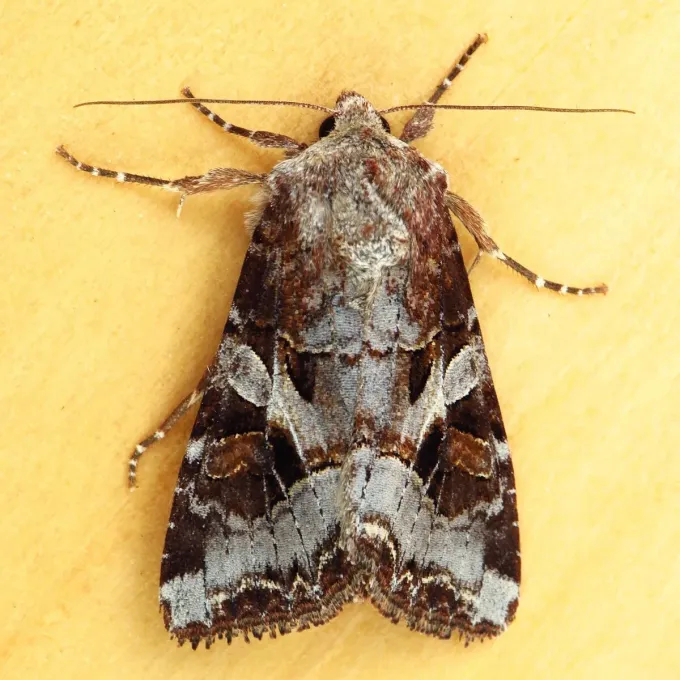
The genus Trichordestra belongs to the Noctuidae family within the order Lepidoptera. Adult moths are typically medium-sized with a cryptic coloration ranging from gray to brown, providing effective camouflage against bark or soil surfaces during the daylight hours.
The forewings of these moths usually display characteristic patterns typical of noctuids, including distinct orbicular and reniform spots. Since distinguishing between closely related species often requires microscopic examination of the genitalia, field identification usually relies on pheromone or light traps.
The larvae, or caterpillars, possess well-developed chewing mouthparts. Their bodies are covered in sparse hairs, and their color can transition from light green to dark brown depending on their developmental stage and specific host plant diet.
Pupation typically occurs within the soil or in organic ground litter. The pupae have a hardened, dark-brown chitinous shell, which serves as a protective mechanism allowing the insect to survive harsh environmental conditions and winter dormancy.
The life cycle follows complete metamorphosis, including egg, larva, pupa, and imago stages. The duration of each phase is strictly dictated by temperature and humidity levels, which ultimately influence the speed at which the population grows during the growing season.
What it damages
The primary damage is caused by the caterpillars, which are polyphagous in nature. They feed on a wide variety of agricultural, horticultural, and wild herbaceous plants, which makes the pest's impact broad and difficult to contain in diverse landscapes.
Major damage occurs during high-density infestations, where larvae strip away leaf tissue, often leaving only the major veins intact. This severe defoliation significantly impairs the plant's ability to photosynthesize, leading to stunted growth and reduced vigor.
In addition to foliage, these pests target reproductive organs, including buds, flowers, and developing fruits. This feeding behavior can lead to flower drop or deformed fruit, resulting in substantial losses in both yield quantity and crop quality.
Wounds caused by larval feeding serve as entry points for various secondary pathogens, including bacteria and fungi. Plants stressed by pest damage become highly susceptible to infections that can further devastate the yield if not addressed early.
Economic threshold levels vary depending on the specific crop and its phenological stage. Agronomic best practices involve early monitoring to detect larvae populations before they reach a density that causes irreversible damage to the canopy or fruit set.
When it appears
Adult flight typically begins in the spring when average daily temperatures remain consistently above freezing. Depending on the geographical region, this phase generally occurs between late April and May, marking the start of the egg-laying period on host plants.
Larval activity peaks during the summer months. Given that multiple generations can emerge within a single season, ongoing monitoring and control measures are often necessary to keep populations below damaging thresholds from spring through late summer.
As autumn approaches, the number of active adults declines as the final generation enters diapause. These larvae descend into the soil to pupate and remain in this stage throughout the winter, waiting for the return of favorable spring temperatures.
Weather patterns, particularly warm and humid summers, can trigger population explosions. Conversely, extended periods of drought can sometimes inhibit larval development, though the pest remains resilient in diverse environmental conditions.
Field professionals often use pheromone-baited traps to predict flight cycles. Precise timing of these monitoring activities allows farmers to apply control measures exactly when they will be most effective, reducing the need for excessive insecticide use.
Signs of infestation
The first indication of Trichordestra presence is the appearance of irregular holes or notched edges on the leaves. As the larvae grow larger, the extent of the damage increases, often leaving patches of shredded leaf tissue throughout the crop.
The presence of frass (larval excrement) on leaves or the soil surface is a clear indicator of active feeding. Large amounts of dark granular pellets are a warning sign that the larval population is high and immediate action is likely required.
Inspecting the underside of leaves during the early morning hours can reveal egg clusters. These small, semi-spherical egg masses attached to the leaf surface are a primary sign of an impending infestation before the larvae emerge to feed.
Buds and flowers that appear wilted or show bite marks often contain larvae hiding within the foliage or deep inside the flower head. Regularly checking the plant's structural nodes is crucial for detecting larvae that prefer to hide during the day.
Increased moth activity around lights during the evening hours serves as an early warning for crop surveillance. High adult counts in light traps are almost always a precursor to a spike in caterpillar activity in nearby fields within the coming days.
Control measures
Cultural control methods, such as deep autumn plowing, are highly effective as they disrupt the pupal stage in the soil. This practice is a cost-effective way to reduce the overwintering population before the next planting season begins.
Biological control, including the use of Bacillus thuringiensis, offers an environmentally friendly alternative to chemical pesticides. These products specifically target young larvae while leaving beneficial insects and predators unharmed.
Chemical control is applied when monitoring data indicates that the population has exceeded the economic threshold. Modern insecticides with contact and stomach action are preferred, as they provide rapid suppression of the larval population.
Strategic crop rotation and the elimination of host weeds are vital for long-term population management. Removing weeds around field margins deprives the pests of alternative food sources and nesting areas during the off-season.
- Regular monitoring with pheromone traps.
- Removal of host weeds to disrupt the life cycle.
- Encouraging natural predator populations.
- Targeted insecticide applications during early larval stages.
Taxonomy
- Latin name
- Trichordestra
- Order
- Lepidoptera (butterflies)
- Family
- Noctuidae
- EPPO code
- TRDTSP
Discussion
No discussions yet — be the first.