
Spodoptera ochrea
Spodoptera ochrea
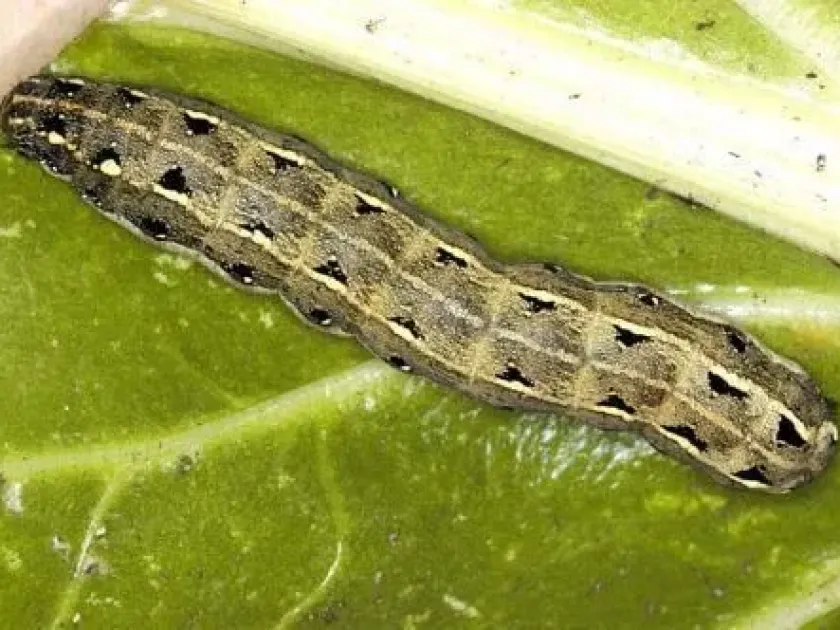
Description
How to identify
Spodoptera ochrea is a moth belonging to the Noctuidae family within the order Lepidoptera. The adults are typically nocturnal, making them difficult to observe during standard field inspections conducted in daylight hours.
The larvae, or caterpillars, follow a distinct developmental pattern common to the Spodoptera genus. Throughout their growth stages, they transition through several instars, changing in size and appearance as they mature into their final larval form.
Females lay their eggs in clusters, typically on the underside of leaves or on plant stems. These egg masses are often covered with fine hairs, providing a protective barrier against environmental stress and various predatory insects.
The biology of this species is highly dependent on environmental variables such as temperature and humidity. Favorable conditions allow for rapid population expansion, which poses a significant threat to various agricultural crops during the growing season.
Pupation occurs within the soil, where the insect remains at a shallow depth. This stage allows the species to survive adverse environmental conditions by entering a period of diapause until environmental cues signal it is time to emerge.
What it damages
This pest affects a wide range of agricultural crops, including cereals, forage grasses, and certain vegetable varieties. Larvae in the later instars are particularly aggressive feeders and can cause extensive damage to foliage.
The most severe damage occurs during active vegetation growth. Larvae skeletonize leaves and consume leaf margins, potentially leading to total defoliation of the crop if the population density remains uncontrolled.
Feeding on growth points significantly reduces the photosynthetic capacity of the plant, leading to stunted growth, delayed development, and substantial yield losses. In severe outbreaks, total loss of seedling stands can occur.
Secondary damage is often caused by the introduction of pathogens through leaf wounds. The feeding process creates entry points for various fungal and bacterial infections, which further compromise plant health.
The high mobility of the pest between neighboring fields makes localized management difficult, necessitating coordinated efforts to prevent the spread of the infestation to surrounding agricultural zones.
Signs of infestation
The primary sign of infestation is the presence of irregular holes in the leaves or skeletonized leaf tissue. Small piles of frass (caterpillar excrement) on the soil surface under the plants are also clear indicators.
Scouting efforts should focus on the underside of leaves, where young larvae congregate shortly after hatching. Early detection of these clusters is crucial for effective intervention before they disperse.
Monitoring moth presence via light or pheromone traps provides early warning of adult flight activity. This signals the start of the egg-laying period and helps predict when larvae will appear.
Stunted growth or wilting in individual plants may suggest larval feeding on the base of the stem or on subterranean roots, especially in younger crop stages.
Regular field inspection schedules allow for the detection of initial hotspots, enabling precise intervention and preventing the need for large-scale prophylactic pesticide applications.
Control measures
Integrated pest management (IPM) incorporates cultural practices such as deep fall plowing, which disrupts the pupal stage in the soil, effectively reducing the population for the next season.
Biological control methods include the release of beneficial insects, such as Trichogramma wasps, which parasitize the pest's eggs and provide natural control within the crop environment.
Chemical intervention is recommended when the damage exceeds economic thresholds. It is vital to rotate insecticides with different modes of action to mitigate the risk of developing resistance.
- Utilizing pheromone traps for precise population monitoring.
- Effective weed management to eliminate alternative host plants.
- Application of bio-rational pesticides like Bacillus thuringiensis during early larval stages.
Combining these diverse strategies ensures sustainable crop production while maintaining the ecological balance and preserving natural enemy populations in the fields.
Taxonomy
- Latin name
- Spodoptera ochrea
- Order
- Lepidoptera (butterflies)
- Family
- Noctuidae
- EPPO code
- SPODOC
Discussion
No discussions yet — be the first.