
Tawny Marbled Minor
Oligia latruncula
Description
How to identify
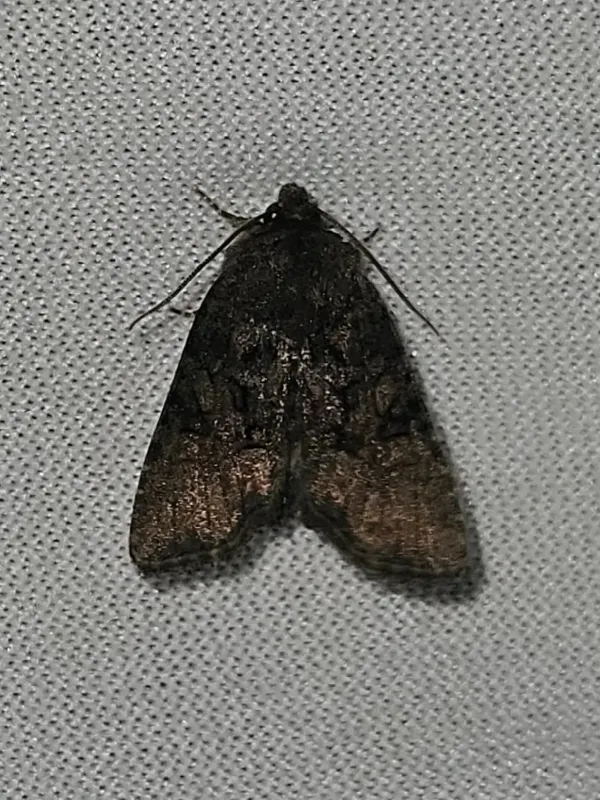
The Tawny Marbled Minor (Oligia latruncula) is a small nocturnal moth belonging to the family Noctuidae. Its wingspan typically ranges from 20 to 25 millimeters, and its coloration varies from greyish-brown to almost black, providing excellent camouflage in diverse environments.
The larva (caterpillar) has a cylindrical body, colored in greyish-brown or dirty-green shades with light longitudinal stripes. The caterpillar's head is usually dark, which serves as a key morphological characteristic for field identification.
Adult moths are nocturnal, hiding during the day in dense vegetation or plant debris. The flight period occurs in summer, which is the time when mass mating and oviposition on host plants take place.
The biological development cycle includes four stages: egg, larva, pupa, and adult. The species most commonly overwinters as a larva in the upper soil layer or at the base of cereal stems, which protects it from extreme winter temperatures.
Pupation occurs in the soil within specially constructed earthen cells. The duration of the life cycle depends on local climatic conditions, and under favorable circumstances, two generations may occur within a single year.
What it damages
The primary damage is caused by larvae that feed on the vegetative parts of plants. Cereals, including winter and spring wheat, rye, and barley, are the most frequent targets of this pest.
In addition to agricultural fields, the pest can be found on wild grasses, which serve as an infection reservoir, allowing the population to persist near crop fields. The polyphagous nature of the larvae broadens the spectrum of host plants significantly.
Damage manifests as the larvae boring into plant stems, disrupting vital physiological processes and causing wilting or death. Damage is particularly critical during the tillering and stem-elongation stages of cereal growth.
High population densities lead to thinning of the crop stand, significantly reducing the potential yield. Damaged plants often become more susceptible to secondary fungal infections due to their weakened state.
The economic injury level depends on the crop and its developmental stage; however, regular monitoring allows for intervention that can prevent yield losses of up to 15-20% during outbreaks.
Signs of infestation
The first sign of infestation is the wilting of the central leaf in a cereal plant cluster, which gradually turns yellow and dries out. Detailed inspection at the stem base often reveals entry holes created by the larvae.
The presence of frass (excrement) at the base of the plant or inside the damaged stem is a direct indicator of active larval feeding. Upon breaking the stem, one can frequently find the caterpillar itself or signs of its internal feeding activity.
Mass emergence of adult moths at night can be monitored using light traps or pheromone traps. This monitoring method helps agronomists estimate population density and make informed decisions regarding protection measures.
In spring, immediately after the resumption of winter crop vegetation, farmers should monitor for patches of "dead" plants. Infestations are often localized, concentrating in specific field areas that provide the most favorable microclimate for the pest.
Visual inspection of the soil beneath plants during early morning hours can help detect larvae, which may move to the surface to feed. Using moisture-retaining traps on the ground surface can also aid in confirming the presence of the pest.
Control measures
Agronomic control measures include mandatory deep autumn plowing, which disrupts the overwintering sites of the larvae and facilitates their destruction. Weed control, especially targeting couch grass, is essential as it acts as a refuge for the pest.
Crop rotation is a critical factor in suppressing population numbers, as interrupting the cereal host chain reduces the reproductive potential of the population.
When the economic injury level is exceeded, chemical protection is necessary. Insecticides from the organophosphate or pyrethroid groups demonstrate high efficacy against exposed larvae.
The optimal timing for application is during the larval hatch, before they penetrate deep into the stem where they become inaccessible to contact insecticides. Using systemic products is recommended to ensure prolonged protection.
Light traps are effective for monitoring and partial trapping of adults, which also allows for species-specific accounting. This enables spot treatments, thereby reducing the overall pesticide load on the agroecosystem.
Taxonomy
- Latin name
- Oligia latruncula
- Order
- Lepidoptera (butterflies)
- Family
- Noctuidae
- EPPO code
- OLIALA
Discussion
No discussions yet — be the first.