
Tomato moth
Melanchra persicariae
Description
How to identify
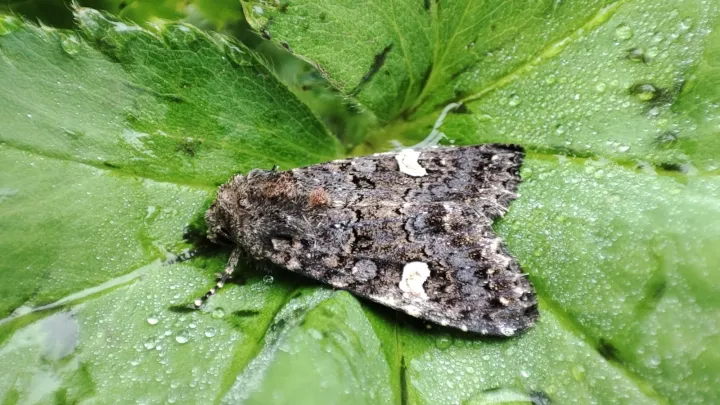
The Tomato moth (Melanchra persicariae) is a member of the Noctuidae family, commonly found across Europe and Asia. Despite its English name, it is a significant pest for many agricultural crops, including peas and various vegetables, not just tomatoes. Adult moths have a wingspan of 35-45 mm, with dark forewings featuring a distinctive white kidney-shaped spot.
Larvae, or caterpillars, progress through several instars. Their coloration is variable, ranging from light green to deep brown or reddish-brown, often adorned with dark markings on the back. They are nocturnal by nature, remaining hidden during the day to avoid predators.
The pupal stage occurs in the soil, where the insect overwinters. This underground stage provides protection against harsh environmental conditions. The life cycle usually consists of one generation per year, although warmer climates may support a partial second generation.
Adult moths are primarily active at night and are attracted to light sources, which is a useful trait for monitoring purposes. Understanding their emergence time is essential for timing protection measures correctly before significant damage occurs.
The species is well-adapted to various habitats, ranging from cultivated fields to gardens and hedgerows. Their ability to survive on a wide range of host plants makes them a persistent challenge for integrated pest management programs globally.
What it damages
As a polyphagous insect, the Tomato moth larvae feed on a wide variety of plants. Primary crops include pulses like peas and beans, as well as vegetables such as potatoes, cabbages, and various leafy greens. This diverse host range ensures the pest is always present in agro-ecosystems.
Young larvae feed primarily on the underside of leaves, skeletonizing them by consuming the green tissue while leaving the veins intact. As they grow older and reach later instars, they become much more voracious, devouring entire leaves and damaging plant stems.
The most severe economic damage occurs when the larvae attack reproductive organs, such as flower buds and developing pods. By consuming these parts, they directly reduce yield and quality, often making the final produce unsuitable for market sale.
Large infestations can strip entire sections of a crop, leaving plants weakened and susceptible to secondary infections like fungal diseases. The entry points created by feeding larvae often serve as portals for pathogens that further degrade plant health.
The presence of frass (larval droppings) on the plant surface is another form of damage, particularly for vegetable crops. This contamination requires additional processing or washing, significantly increasing labor and post-harvest handling costs for growers.
When it appears
The flight period for adult moths typically begins in late spring or early summer, following the warming of the soil. Mating and oviposition usually occur shortly after emergence, with eggs laid in small batches on the undersides of host plant leaves.
Caterpillars are active throughout the summer months. This period requires constant monitoring, as the larvae rapidly transition through growth stages. Peak activity often aligns with the crucial flowering and fruiting phases of many important agricultural crops.
By late summer, the caterpillars cease feeding and burrow into the soil to pupate. They remain in the soil through the autumn and winter, emerging as adults the following season. This developmental rhythm is consistent across most temperate regions.
Local climate significantly influences the population size. Favorable weather with moderate humidity promotes high survival rates of larvae, leading to increased pest pressure. Conversely, extreme heat or very dry conditions can naturally suppress the moth population.
Regular field inspections throughout the growing season are necessary to identify the pest at the early larval stages. Once caterpillars mature, they become significantly harder to manage using conventional chemical or biological control agents.
Signs of infestation
Initial signs of infestation appear as irregular holes in the foliage, often concentrated on the lower levels of the plant. A careful inspection of the leaf undersides during early stages usually reveals the presence of egg clusters or very small larvae.
Accumulation of larval excrement on leaves is a clear indicator of active feeding. If caterpillars are not immediately visible, their presence can be confirmed by looking for them at night using a flashlight, as they emerge from their hiding spots to feed.
The presence of damaged flowers or missing fruit pods is a symptom of advanced larval activity. When a crop shows signs of uneven growth or premature wilting, it is often a sign that larvae have been feeding on the stems or buds for some time.
Using pheromone traps is the most reliable way to monitor the presence and activity levels of adult moths. This allows farmers to receive an early warning before the eggs hatch into voracious caterpillars, optimizing the timing for any necessary interventions.
Finding pupae during soil preparation, such as plowing, indicates a high risk for the upcoming season. Fields where the pest was previously observed should be treated with increased vigilance to ensure early detection and prevent widespread crop destruction.
Control measures
Good agricultural practices are the foundation of control. Deep fall plowing is highly effective, as it brings pupae to the surface, exposing them to freezing temperatures, birds, and other predators, which significantly reduces the over-wintering population.
Crop rotation remains a fundamental strategy to disrupt the life cycle of the moth. By avoiding host crops in the same location for consecutive years, farmers can effectively limit the buildup of the local pest population and reduce the need for chemicals.
Chemical control should be applied based on economic thresholds to minimize environmental impact. Rotating insecticides with different modes of action is crucial to prevent the development of resistance within the pest population, which is a common risk with Noctuid moths.
Biological controls, including the release of beneficial insects like *Trichogramma* egg parasitoids, can be highly effective during the early stages of the moth's life cycle. This method is both sustainable and compatible with modern integrated pest management goals.
Maintaining optimal soil fertility and plant vigor helps the crop withstand damage. A healthy, well-nourished plant can often compensate for minor larval feeding, allowing for better yield outcomes even when pest populations are present in the field.
Taxonomy
- Latin name
- Melanchra persicariae
- Order
- Lepidoptera (butterflies)
- Family
- Noctuidae
- EPPO code
- POLIPE
Discussion
No discussions yet — be the first.