
Sudan bollworm
Diparopsis
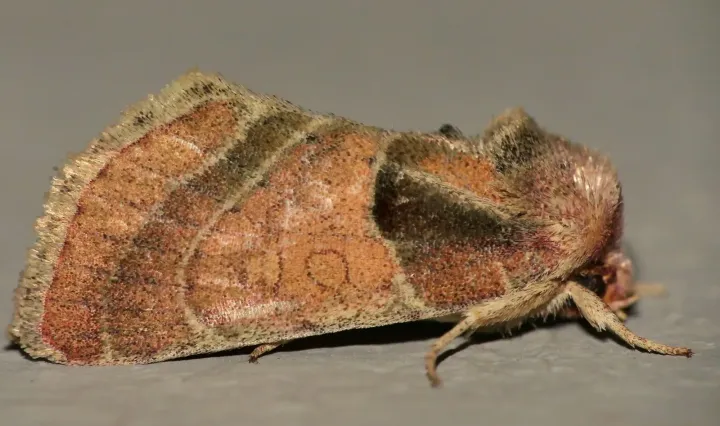
Description
How to identify
The Sudan bollworm (Diparopsis castanea) belongs to the Noctuidae family of the order Lepidoptera. Adult moths typically have a wingspan of 30–35 mm with an ochre-brown coloration, featuring distinctive dark zigzag lines across their forewings.
The larvae, or caterpillars, are the primary life stage causing economic damage. They exhibit a pale body with longitudinal reddish-brown stripes, which distinguishes them from other common cotton pests in their native African range. They are highly mobile and feed voraciously on cotton organs.
Pupation occurs within the soil at depths of 10–15 cm. The pupae are encased in firm, earthen cocoons that provide protection against extreme heat and desiccation. They are capable of prolonged diapause, which allows the species to survive the off-season effectively.
The life cycle is tightly synchronized with the phenology of the cotton plant. Depending on regional climate, there can be multiple generations per year. The rate of development is heavily influenced by temperature and moisture, which dictate the speed of larval maturation and reproductive success.
This pest is primarily distributed across the African continent, where it remains a significant threat to cotton production. Its ability to feed specifically on reproductive organs makes it a major limiting factor for cotton yields in infested agricultural regions.
What it damages
The Sudan bollworm is a specialized pest of cotton (Gossypium). It specifically targets the reproductive parts of the plant, including squares, flowers, and bolls. This feeding behavior results in direct losses of the crop's yield potential throughout the growing season.
Larval feeding causes squares and young bolls to drop prematurely. This "shedding" of the reproductive organs significantly reduces the number of bolls that reach maturity, causing substantial declines in the total harvest weight and cotton fiber output.
When larvae penetrate older bolls, they consume the developing seeds and damage the lint. This internal feeding creates entry points for secondary bacterial and fungal pathogens, which often cause the entire boll to rot, rendering the fiber unusable for industrial textile manufacturing.
Damage to the lint not only reduces the quantity of the crop but also degrades its quality. Infested bolls often fail to open properly or open in a distorted manner, which complicates mechanical harvesting processes and increases costs for producers.
- Shedding of buds and young bolls.
- Visible entry holes in cotton bolls.
- Rotting of fiber and seeds inside the boll.
- Deformed bolls and impaired harvest quality.
Signs of infestation
One of the earliest signs of an infestation is the sudden and widespread shedding of buds. Growers may notice a carpet of fallen reproductive organs beneath the cotton plants, which indicates that larvae have initiated their feeding cycle within the crop.
Upon inspecting a damaged boll, one can observe larval excrement (frass) mixed with damaged tissue. Because a single larva can move from one fruit to another throughout its development, a single insect can effectively destroy several bolls during its lifetime.
Pheromone traps are essential for early detection. Monitoring the flight activity of adult moths allows farmers to determine the peak of population buildup, serving as a critical signal to initiate management interventions before the larvae cause irreparable damage to the bolls.
Eggs are small, white, and typically laid singly on tender areas like terminals, leaf petioles, or bracts of the squares. Regular scouting of these areas is recommended to catch the infestation at the egg stage or during the early larval instar before they burrow deep into the tissue.
Local wilting or damage to the plant's terminals may also suggest the presence of early-instar larvae. These larvae occasionally feed on tender stems or growing points while searching for suitable squares to inhabit during their subsequent growth stages.
Control measures
Cultural control practices are fundamental to managing the Sudan bollworm. Deep plowing of fields immediately after harvest is highly effective in destroying pupae residing in the soil, which significantly breaks the life cycle and reduces the starting population for the next season.
Biological control options include the use of Bacillus thuringiensis (Bt) based formulations, which effectively target young larvae. Additionally, preserving indigenous natural enemies, such as parasitoid wasps that prey on bollworm eggs, is vital for maintaining a natural balance.
Chemical control remains a primary tool in high-infestation scenarios. The application of insecticides should be timed based on trap data and visual scouting to ensure maximum effectiveness while minimizing the risk of the pest developing resistance to specific chemical classes.
The adoption of transgenic cotton varieties (Bt cotton) that express insecticidal proteins is considered the gold standard for controlling this bollworm species. These crops provide season-long protection, drastically reducing the need for multiple broad-spectrum pesticide applications.
Integrated Pest Management (IPM) strategies, including crop rotation and the removal of alternative host weeds (especially Malvaceae), help keep population levels low. By maintaining a clean field environment, farmers can significantly lessen the incidence of this devastating pest.
Taxonomy
- Latin name
- Diparopsis
- Order
- Lepidoptera (butterflies)
- Family
- Noctuidae
- EPPO code
- DIPASP
Discussion
No discussions yet — be the first.