
Titicaca moth
Helicoverpa titicacae
Description
How to identify
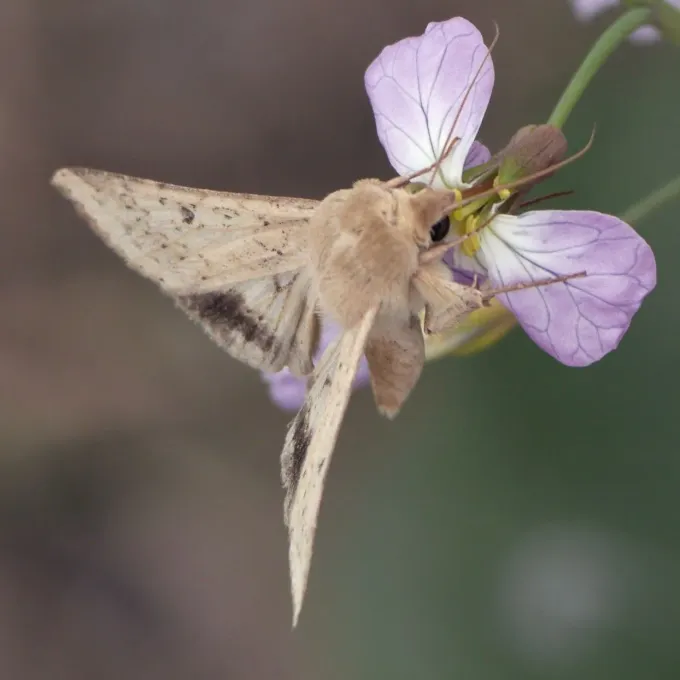
The Titicaca moth (Helicoverpa titicacae) is a species of the Noctuidae family, specifically adapted to the harsh conditions of the high-altitude Andean regions.
As a member of the genus Helicoverpa, it shares morphological similarities with other bollworms, requiring careful examination for accurate species identification.
The adult moth is specialized for life in thin air and variable temperatures typical of the Lake Titicaca basin and surrounding highlands.
The larval stages exhibit color variations that serve as camouflage, helping them survive among native vegetation and potato fields.
Pupation occurs in the soil, where the pupa remains dormant to survive the cold, dry winters characteristic of high-altitude ecosystems.
What it damages
The primary agricultural impact of Helicoverpa titicacae is observed in potato fields, which are vital for the local food security.
The larvae feed voraciously on leaves and stems, but the most significant damage occurs when they burrow into the potato tubers.
By consuming plant tissues, the pest disrupts the physiological processes of the potato plant, leading to stunted growth and reduced yields.
Secondary infections often follow larval feeding, causing rot in the tubers and making them unsuitable for both processing and storage.
During outbreak years, the pest can cause severe economic losses to smallholder farmers by decimating potato crops during critical growth phases.
When it appears
The life cycle of the Titicaca moth is tightly synced with the short growing season of high-altitude environments in the Andes.
Activity begins with the onset of warmer temperatures, which triggers the emergence of adult moths from overwintering pupae.
Larval development peaks during the period of tuber initiation and development, making this the most dangerous time for crops.
The climatic conditions dictate the speed of the life cycle, with cooler years significantly slowing down larval growth and reproductive rates.
The moth is a seasonal pest, with its presence being most noticeable during the primary cropping season of the region.
Signs of infestation
Initial signs of an infestation include the presence of small, ragged holes in the leaves of potato plants caused by young larvae feeding.
Wilting of the plant tops often indicates that the larvae have bored into the stems, disrupting the flow of water and nutrients.
Evidence of frass (larval droppings) on leaves and around the base of the plant is a primary indicator of larval presence.
When tubers are affected, external entrance holes become visible, often accompanied by the onset of early decay or fungal growth.
- Eggs deposited on the undersides of leaves.
- Visible tunneling on the surface of tubers.
- Early senescence of leaves in affected potato plants.
Control measures
Crop rotation is the fundamental preventive measure, disrupting the life cycle of the moth by changing the available host plants.
Mechanical tillage after harvest helps expose pupae to the surface, where they are susceptible to predation and extreme weather conditions.
Integrated pest management (IPM) practices, including the use of pheromone traps, are essential for monitoring population levels.
Biological control agents, such as specific entomopathogenic bacteria, provide a safer alternative to synthetic insecticides in fragile alpine ecosystems.
Targeted chemical application should only be performed when the population density reaches levels that threaten crop profitability.
Taxonomy
- Latin name
- Helicoverpa titicacae
- Order
- Lepidoptera (butterflies)
- Family
- Noctuidae
- EPPO code
- HELITI
Discussion
No discussions yet — be the first.