
Spodoptera pectinicornis
Spodoptera pectinicornis
Description
How to identify
Spodoptera pectinicornis belongs to the family Noctuidae, order Lepidoptera. It is a specialized species often recognized for its role in the biological control of invasive aquatic plants.
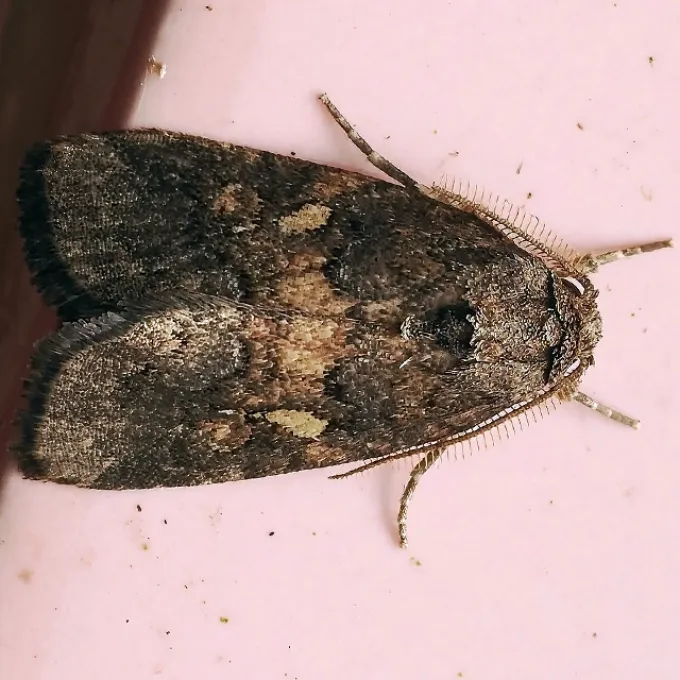
Adults are nocturnal moths with a wingspan of approximately 30–35 mm. Their wing patterns are typically mottled with shades of grey and brown, providing excellent camouflage against vegetation.
The larvae go through several instars, changing their appearance from a pale green shade to darker, brownish tones. They possess sparse hair, consistent with the morphology of other armyworm species.
The life cycle undergoes complete metamorphosis, including egg, larva, pupa, and adult stages, with each phase dependent on environmental humidity and temperature.
Due to the cryptic nature of the larvae, which often bore into stems or reside within dense foliage, visual identification can be challenging for those unfamiliar with their habits.
What it damages
This pest is primarily known for feeding on aquatic plants, particularly the water hyacinth (Eichhornia crassipes), where it acts as a specialist herbivore.
Larvae consume leaf tissue and petioles, leading to significant defoliation and a reduction in the vigor of the host plant population.
While considered beneficial in certain regions for weed control, in areas with ornamental or cultivated aquatic plants, the insect can cause extensive damage.
The larvae bore into the stems and leaves, causing internal destruction that interrupts nutrient transport and often leads to the rotting of the affected parts.
Economic impact varies; it is managed as a pest in specific horticultural settings while being studied as a potential biocontrol agent in others.
When it appears
Adult activity peaks during the warmer months, as temperature is the primary driver for egg-laying and larval development rates.
The generation time ranges from three to five weeks depending on the temperature, allowing for multiple overlapping generations in tropical climates.
Winter survival typically occurs at the pupal stage, with pupae overwintering within protective cocoons embedded in decaying vegetation or soil near the water's edge.
Population surges generally coincide with the active growing season of aquatic vegetation, which provides the larvae with optimal food resources.
The moth favors stagnant or slow-moving water bodies, as these environments offer the thermal stability required for successful larval maturation.
Signs of infestation
The first signs of infestation include ragged leaf margins and irregular holes appearing on the leaves of aquatic plants.
Internal damage, such as frass-filled tunnels within stems and petioles, is a clear indicator of larval boring activity within the plant structure.
Careful examination of the underside of leaves may reveal egg clusters covered with protective scales, which the female moth places strategically.
Presence of larvae at the base of leaf stalks or inside hollowed stems confirms an ongoing infestation, even if the moths themselves are not observed.
Secondary rotting and wilting of plant parts are often visible consequences, as the wounds created by larvae allow pathogens to enter the plant tissue.
Control measures
Mechanical control involves the regular removal and destruction of infested plant material, which significantly lowers the local larval population.
Biological control using microbial insecticides, such as Bacillus thuringiensis, is highly effective and poses minimal risk to the surrounding aquatic ecosystem.
Chemical intervention is generally discouraged in aquatic environments due to the toxicity risks to fish and non-target invertebrates, making targeted biocontrol superior.
Good pond management practices, including the removal of excess vegetation, help reduce the availability of oviposition sites and breeding areas for the pest.
Monitoring adult moth populations via light traps is an essential strategy for early detection, allowing for timely implementation of non-chemical management tactics.
Taxonomy
- Latin name
- Spodoptera pectinicornis
- Order
- Lepidoptera (butterflies)
- Family
- Noctuidae
- EPPO code
- SPODPC
Discussion
No discussions yet — be the first.