
Spodoptera androgea
Spodoptera androgea
Description
How to identify
Spodoptera androgea is a member of the Noctuidae family, belonging to the order Lepidoptera. This species is primarily found in tropical and subtropical regions of South and Central America.
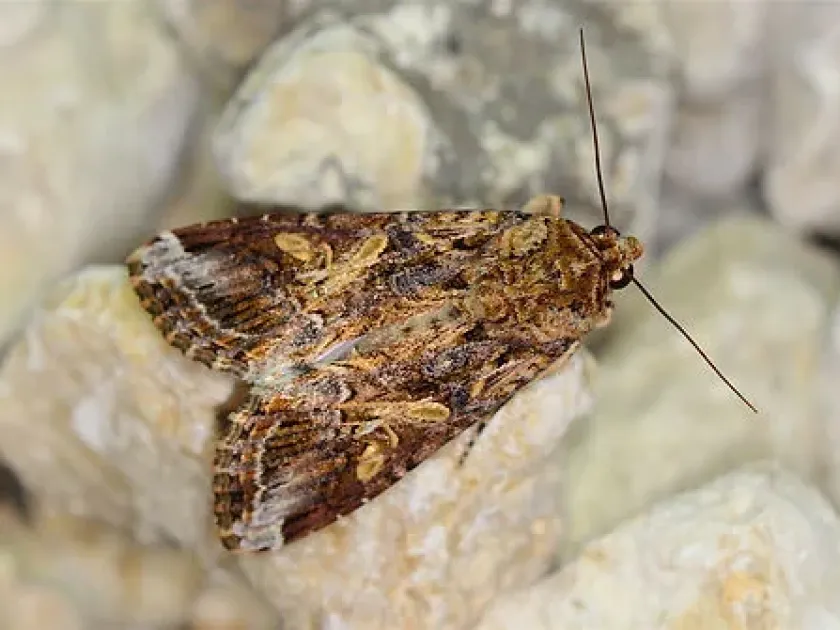
The adult moth is characterized by a moderate wingspan and a cryptic coloration pattern, typically featuring shades of brown and gray to blend into natural surroundings.
Larvae pass through several instars, with their coloration shifting from a light greenish hue to darker, more intense shades with longitudinal stripes as they mature.
Pupation generally occurs in the soil, where the insects form a protected cell to undergo metamorphosis before emerging as adult moths.
The developmental cycle of this pest is highly dependent on ambient temperature and humidity, which significantly influences the number of generations per year.
What it damages
As a polyphagous pest, Spodoptera androgea feeds on a wide range of important agricultural crops, including corn, soybeans, and various legumes.
The caterpillars are highly active feeders that consume vegetative tissues, leading to significant defoliation of the host plant.
Severe infestations can result in complete skeletonization of leaves, where only the primary veins remain, severely impacting the plant's photosynthetic capacity.
Feeding damage to the apical meristem or growing points can stunt the growth of young plants, leading to irregular stands and reduced plant vigor.
The pest also attacks reproductive structures, such as flowers and young pods, directly threatening the final yield of the affected crop.
Signs of infestation
Large, irregular holes in the leaf blades are one of the most visible indicators that larvae are present and feeding on the crop.
The accumulation of larval frass (excrement) on leaf surfaces or at the base of the plant is a clear sign of an active infestation.
Egg masses, often covered with a layer of grayish or light scales from the female abdomen, can be found on the underside of leaves.
During the early morning or evening hours, larvae may be observed directly on the foliage, as they are most active during these cooler periods.
Wilting of parts of the plant or distinct patches of damaged crops in the field indicate that population levels have reached a concerning threshold.
Control measures
Effective management begins with regular field scouting and the use of pheromone-baited traps to monitor adult moth activity.
Cultural practices, including the removal of alternative host weeds, help to reduce the survival rate of larvae between planting seasons.
Biological control agents, such as formulations containing Bacillus thuringiensis, are effective against young larvae and represent an environmentally sustainable option.
Chemical control measures should be applied when populations reach established economic injury levels, utilizing targeted insecticide sprays.
Resistance management is crucial; therefore, growers are advised to rotate active ingredients to ensure the long-term effectiveness of chemical treatments.
Taxonomy
- Latin name
- Spodoptera androgea
- Order
- Lepidoptera (butterflies)
- Family
- Noctuidae
- EPPO code
- SPODAN
Discussion
No discussions yet — be the first.